
I’ve handled thousands of T-shirts across sourcing, sampling, and daily wear. If you’ve ever stood in a store thinking, “This looks fine… but is it actually good quality?”—you’re not alone.
Here’s the short, honest answer:
A high-quality T-shirt feels good on day one and still looks good after 20+ washes.
You can spot quality in under 60 seconds if you know what to check.
This guide shows you exactly how to judge T-shirt quality—no jargon, no brand hype.
Table of Contents
- Quick Answer
- The 7-Point Quality Checklist (In-Store Test)
- Fabric: What to Look For
- Construction: Seams, Stitching & Collar
- Fit & Drape: How It Should Sit on Your Body
- Wash Test: What Fails First
- Good vs Bad T-Shirts (Quick Comparison)
- FAQ
- Final Verdict
Quick Answer
If a T-shirt passes these 3 checks, it’s usually high quality:
- Feels substantial (not paper-thin)
- Has clean, tight stitching at seams and collar
- Holds shape when lightly stretched
Fail one of these? It’s probably going to look tired fast.
The 7-Point Quality Checklist (In-Store Test)
You can do this in under a minute:
- Fabric weight – Does it feel flimsy or substantial?
- Stretch & recovery – Stretch the hem lightly; does it snap back?
- Sheerness test – Hold it to the light; see-through = usually lower quality
- Seam inspection – Look for straight, tight stitches
- Collar integrity – Tug the collar; it shouldn’t ripple
- Twist test – Are side seams straight? Twisted seams = poor cutting
- Surface feel – Smooth and even beats fuzzy and uneven
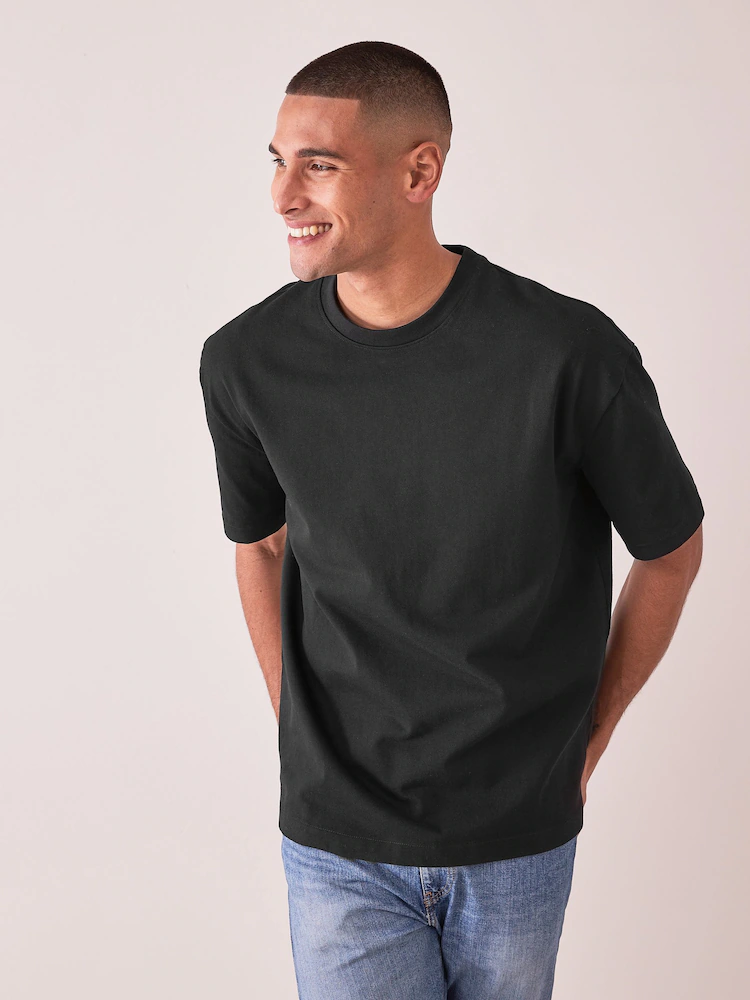
Fabric: What to Look For
High-quality T-shirts usually use:
- Longer-staple cotton (smoother, stronger)
- Heavier GSM (more structure)
- Tight knit density (less transparency)
Brands known for better fabric feel include Buck Mason and Everlane.
Value-focused brands like Uniqlo often hit a solid middle ground.
Construction: Seams, Stitching & Collar
Check these three areas:
- Shoulder seams – Should sit flat, no puckering
- Side seams – Straight, not twisted
- Neck rib – Dense ribbing holds shape longer
Poor construction shows up first at the collar—if it waves after a few washes, quality was never there.
Fit & Drape: How It Should Sit on Your Body
A quality tee:
- Hangs straight from shoulders
- Doesn’t cling awkwardly
- Doesn’t flare out at the waist
- Keeps its length after washing
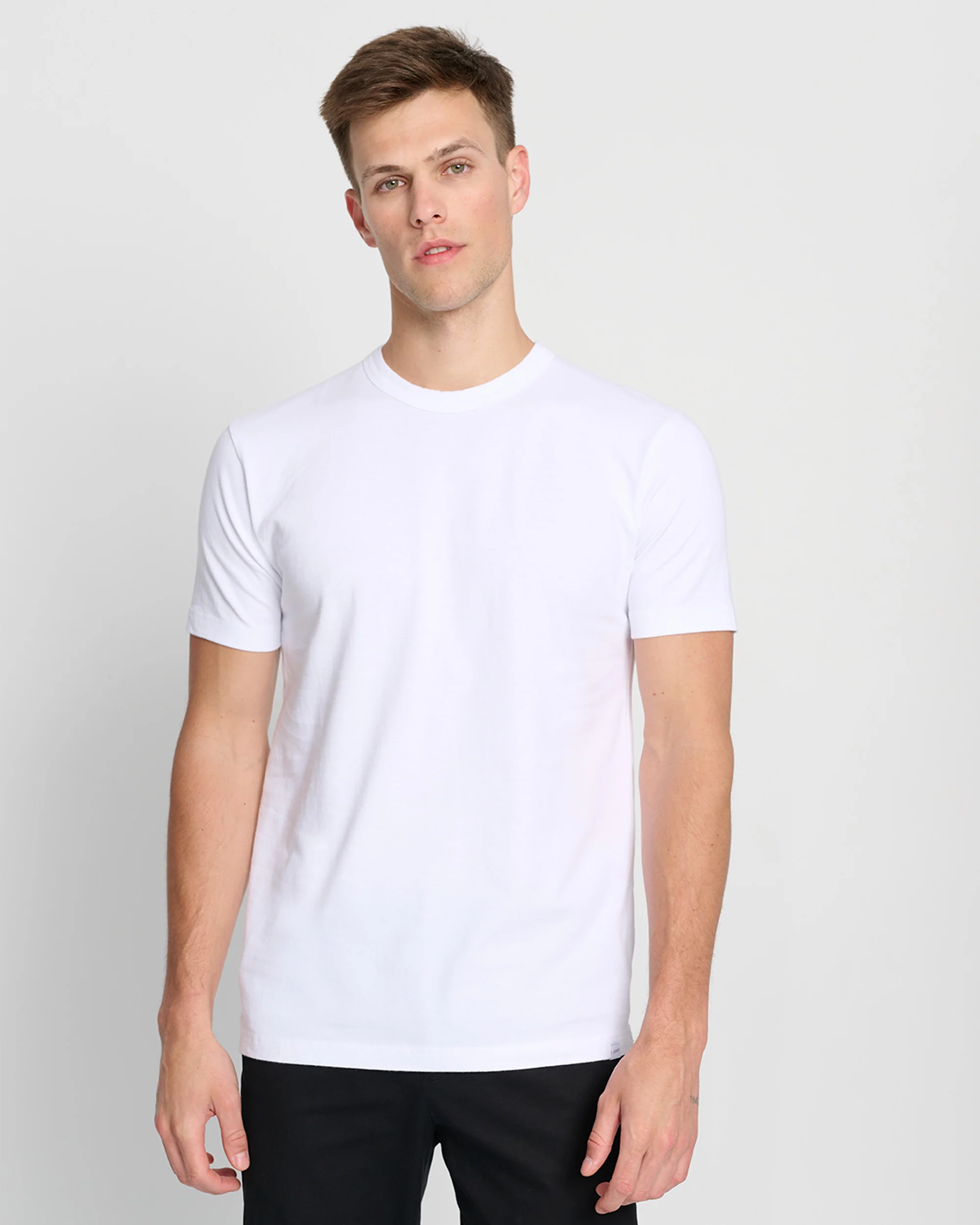
If the drape looks off in the mirror, better fabric won’t save it.
Wash Test: What Fails First
After 5–10 washes, low-quality tees show:
- Bacon-collar necklines
- Twisted side seams
- Fading or rough texture
- Shrinkage in length
High-quality tees:
- Keep shape
- Stay smooth
- Maintain color
- Don’t torque sideways
Good vs Bad T-Shirts (Quick Comparison)
| Check Point | High Quality Tee | Low Quality Tee |
|---|---|---|
| Fabric feel | Substantial, smooth | Thin, papery |
| Seams | Straight, tight | Wavy, loose |
| Collar | Dense rib, stable | Loose, ripples |
| Drape | Clean lines | Warps after wash |
| Longevity | 20+ washes | Loses shape fast |
FAQ
Is a higher price always higher quality?
No. Price reflects brand and marketing too. Construction and fabric matter more.
Are thick T-shirts always better?
Not always, but ultra-thin tees usually wear out faster.
Do premium brands guarantee quality?
They increase your odds, but still check construction.
Is pre-shrunk fabric important?
It helps reduce surprises after washing, but construction still matters more.
Final Verdict
You don’t need a brand name to spot a high-quality T-shirt—you need a checklist.
Feel the fabric. Check the seams. Test the collar.
If it passes those basics, it’ll likely pass the long-term wear test too.
If you’re evaluating blanks for custom apparel or private-label production and need consistent quality standards at scale, see:
👉 blessclothing