
If you’ve spent time online, you’ve probably seen people debating a strange question:
Did the Fruit of the Loom logo ever include a cornucopia?
Many people clearly remember a basket-shaped cornucopia behind the fruit, yet when you look at official logos today, it’s not there.
This mystery has become one of the most famous examples of what people call the “Mandela Effect.”
In this article, I’ll explain the history of the Fruit of the Loom logo, why so many people remember a cornucopia, and what the brand’s official records actually show.
Table of Contents
- Quick Answer
- What the Fruit of the Loom Logo Actually Looks Like
- Why People Remember a Cornucopia
- The Mandela Effect and Brand Memory
- Fruit of the Loom Logo History
- Comparison: Memory vs Reality
- Why Logo Myths Spread Online
- FAQ
- Final Thoughts
Quick Answer
No. The Fruit of the Loom logo has never officially included a cornucopia.
According to the company and historical trademark records, the logo has always shown a group of fruits (usually apples, grapes, and leaves) without a cornucopia basket behind them.
You can explore the brand’s official information on Fruit of the Loom.
However, many people strongly remember seeing a cornucopia because of memory confusion and visual association.
What the Fruit of the Loom Logo Actually Looks Like
The classic Fruit of the Loom logo includes:
- red apples
- purple grapes
- green leaves
- sometimes currants
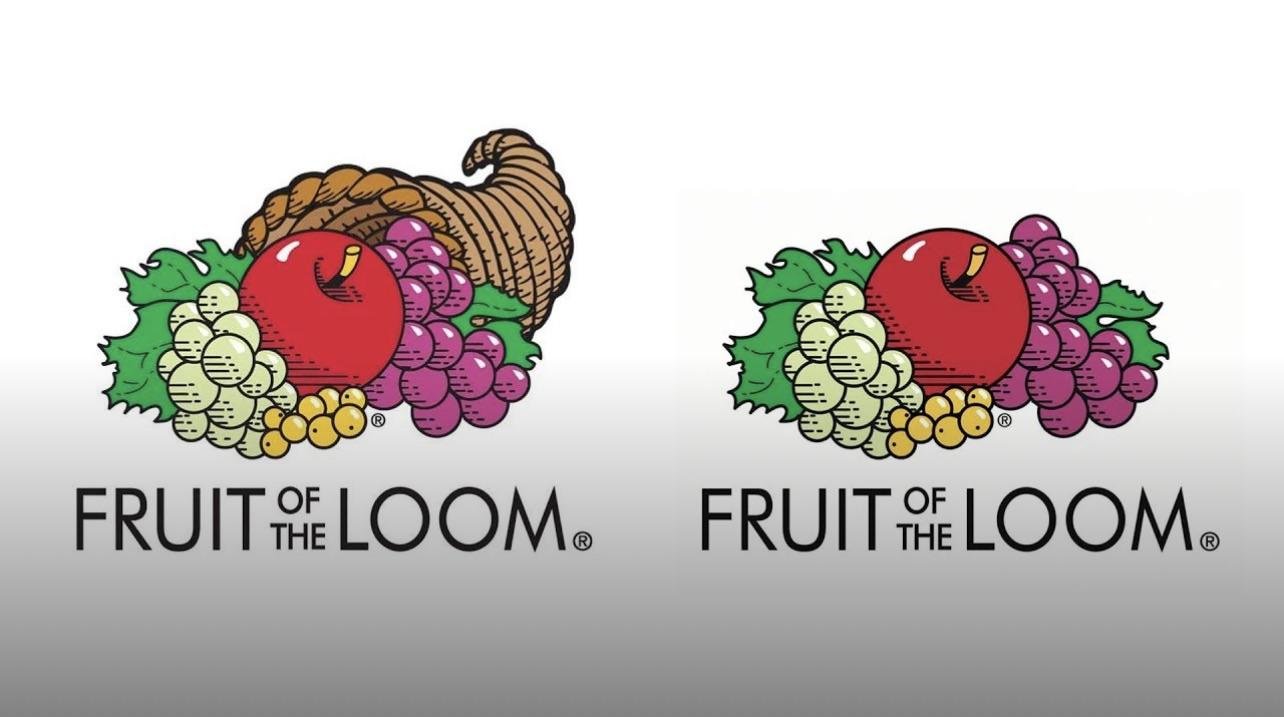
The fruits are grouped together in a simple arrangement.
Key Characteristics
| Feature | Present in Logo |
|---|---|
| Fruit cluster | Yes |
| Leaves | Yes |
| Cornucopia basket | No |
| Text branding | Yes |
Despite widespread belief, no official logo version contains a cornucopia.
Why People Remember a Cornucopia
One reason this debate became so popular is because many people insist they clearly remember the cornucopia.
Several explanations help explain this.
1. Visual Association
A pile of fruit naturally reminds people of a cornucopia, a traditional symbol of abundance.
This mental association may cause people to fill in missing details when recalling the logo.
2. Cultural Imagery
Cornucopias appear frequently in:
- Thanksgiving decorations
- harvest artwork
- educational illustrations
These visuals are often very similar to the Fruit of the Loom fruit cluster.
3. Memory Reconstruction
Human memory is not perfect.
Psychologists explain that memories are reconstructed rather than replayed, meaning people can confidently remember details that never existed.
The Mandela Effect and Brand Memory
The cornucopia debate is often cited as a classic example of the Mandela Effect.
The Mandela Effect occurs when large groups of people share the same incorrect memory.
Other well-known examples include:
- movie quotes remembered incorrectly
- brand logos remembered differently
- spelling differences in famous names
In branding, small visual elements can easily become distorted in memory.
Fruit of the Loom Logo History
The brand has used variations of the fruit cluster logo for over a century.
Important Milestones
| Year | Logo Change |
|---|---|
| 1893 | First fruit-based logo |
| Early 1900s | Color improvements |
| Late 20th century | Modernized design |
| Today | Simplified fruit cluster |
Throughout these versions, no cornucopia appears in trademark records.
Comparison: Memory vs Reality
Let’s compare the commonly remembered version with the official logo.
| Element | Public Memory | Official Logo |
|---|---|---|
| Fruit pile | Yes | Yes |
| Cornucopia | Many remember | Never existed |
| Basket behind fruit | Often remembered | Not present |
| Brand name | Yes | Yes |
This difference explains why the debate continues online.
Why Logo Myths Spread Online
Brand myths often spread quickly because they combine:
- nostalgia
- collective memory
- visual symbolism
When people share similar memories, the story spreads rapidly through:
- forums
- social media
- viral videos
But official sources usually tell a different story.
FAQ
Did Fruit of the Loom ever confirm a cornucopia logo?
No. The company has stated that a cornucopia has never been part of its logo design.
Why do people remember the cornucopia?
Most likely because of visual association and memory reconstruction, which can make people recall details incorrectly.
What fruits appear in the logo?
Typical elements include apples, grapes, and leaves arranged in a cluster.
Is the cornucopia debate part of the Mandela Effect?
Yes. Many people consider it one of the most famous branding-related Mandela Effect examples.
Final Thoughts
So, was the Fruit of the Loom logo ever a cornucopia?
Based on historical records and trademark archives, the answer is no. The logo has always featured a cluster of fruit without a basket behind it.
However, the widespread memory of a cornucopia highlights how powerful brand imagery and human memory can be.
Understanding how logos, apparel branding, and product design evolve is an important part of the clothing industry. If you’re curious about how modern apparel brands develop their identity and products, you can explore more insights from blessclothing, where clothing design, manufacturing, and brand development come together.