
Table of Contents
- Quick Answer
- What Does Low MOQ Mean in Apparel Manufacturing?
- Why Low MOQ Matters for Modern Brands
- What Makes Bless Clothing Different
- Our Custom Apparel Capabilities
- How Our Low MOQ System Works
- Production Workflow Explained
- Bless Clothing vs Traditional Manufacturers
- Best Use Cases for Low MOQ Production
- FAQs
- Conclusion
Quick Answer
Bless Clothing is a low MOQ custom apparel manufacturer that allows brands to produce as few as 100 pieces per design while maintaining high customization and consistent quality.
From my experience, this model is ideal for:
- Startups launching new brands
- Testing new product ideas
- Scaling collections without overstock risk

What Does Low MOQ Mean in Apparel Manufacturing?
MOQ stands for Minimum Order Quantity — the smallest number of units a factory will produce per design.
Typical Industry Standard:
- Large factories: 500–2000 pcs
- Mass production: 10,000+ pcs
Low MOQ (Like Bless Clothing):
- Around 100 pcs per design
This difference is critical.
Because MOQ directly impacts:
- Your investment risk
- Inventory pressure
- Speed of launching products
Why Low MOQ Matters for Modern Brands
The market has changed.
Today’s brands don’t operate like traditional fashion companies.
From what I’ve seen, successful brands now:
- Launch small batches
- Test products quickly
- Iterate based on customer feedback
Low MOQ enables this strategy.
Without Low MOQ:
- High upfront cost
- Slow product cycles
- Higher risk of unsold stock
With Low MOQ:
- Faster validation
- Lower financial risk
- More flexibility
What Makes Bless Clothing Different
Bless Clothing is built specifically for brands that need flexibility.
We are not a mass-production factory —
we are a custom apparel partner for growing brands.
Key Differentiators:
- Low MOQ starting at 100 pcs
- Fast sampling (5–7 days)
- Full customization (fabric, fit, branding)
- Direct communication with production team
- Focus on casualwear and private label
From my perspective, this positioning fills the gap between:
- Small unreliable workshops
and - Large inflexible factories
Our Custom Apparel Capabilities
We support a wide range of custom clothing production:
Product Categories
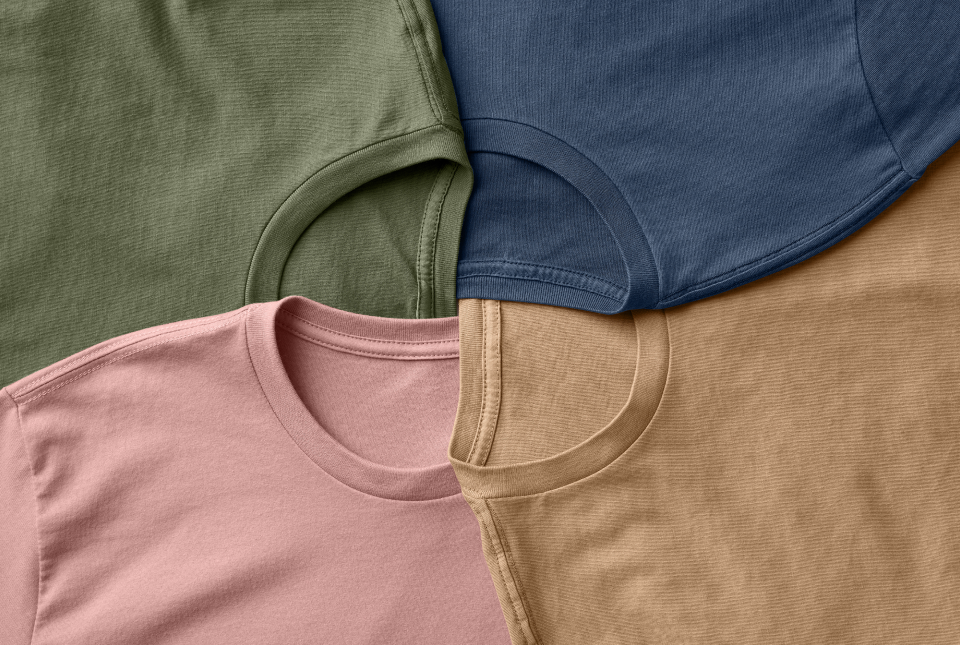
- T-shirts (including oversized fits)
- Hoodies and sweatshirts
- Loungewear and casual sets
- Streetwear essentials
Customization Options
| Area | What You Can Customize |
|---|---|
| Fabric | Cotton, blends, performance fabrics |
| Fit | Oversized, regular, custom sizing |
| Branding | Labels, hangtags, packaging |
| Graphics | Printing, embroidery, washing |
This is what allows brands to create unique products instead of generic items.
How Our Low MOQ System Works
Low MOQ is not just about smaller numbers —
it requires a different production approach.
Here’s how we make it work:
1. Flexible Production Planning
We organize smaller batches efficiently to reduce waste.
2. Material Optimization
We select fabrics and cutting layouts that support smaller runs.
3. Streamlined Communication
Fewer layers → faster decisions → fewer mistakes.
4. Controlled Workflow
We maintain consistency even at lower quantities.
Production Workflow Explained
Here’s a simplified version of how production works:
Step 1: Design & Requirements
You provide your concept or reference.
Step 2: Sample Development
We create a sample for approval.
Step 3: Revisions
Adjust fit, color, and details.
Step 4: Bulk Production
Cutting, sewing, printing/embroidery.
Step 5: Quality Control
Inspection before shipment.
Step 6: Delivery
Global shipping to your market.
Bless Clothing vs Traditional Manufacturers
| Feature | Bless Clothing | Traditional Factories |
|---|---|---|
| MOQ | Low (100 pcs) | High (500–2000+) |
| Flexibility | High | Low |
| Customization | High | Medium |
| Speed | Fast | Slower |
| Best For | Startups & growing brands | Large-scale production |
From my experience, choosing between these depends on your business stage, not just price.
Best Use Cases for Low MOQ Production
Low MOQ works best in these scenarios:
1. Launching a New Brand
Test your first collection with minimal risk.
2. Testing New Designs
Validate demand before scaling.
3. Limited Drops
Create scarcity and exclusivity.
4. Scaling Gradually
Increase volume only after proven sales.
FAQs
What is your MOQ?
Typically around 100 pieces per design.
Does low MOQ mean lower quality?
No — quality depends on process control, not quantity.
Can I customize everything?
Yes — fabric, fit, branding, and packaging.
How fast is production?
- Samples: 5–7 days
- Bulk: 20–35 days
Is this suitable for beginners?
Yes — especially for startups and small brands.
Conclusion
Low MOQ manufacturing is not just a feature —
it’s a strategy.
Bless Clothing enables brands to:
- Start small
- Move fast
- Scale with confidence
From my experience, the brands that succeed today are not the ones producing the most —
they are the ones testing, adapting, and evolving the fastest.
And that starts with choosing the right manufacturing partner.