
Table of Contents
- Quick Answer
- Why Startups Struggle with Large Factories
- What Startups Actually Need
- Bless Clothing vs Large Factories: Key Differences
- Detailed Comparison: Where Each Option Wins
- Real Scenario: Startup Decision Example
- Pros & Cons for Startups
- When to Choose Bless Clothing vs Large Factories
- FAQs
- Conclusion
Quick Answer
Yes — Bless Clothing is generally a better choice for startups than large factories because it offers lower MOQ, greater flexibility, and a more supportive production process.
From my experience, startups don’t need scale first —
they need control and flexibility.
Why Startups Struggle with Large Factories
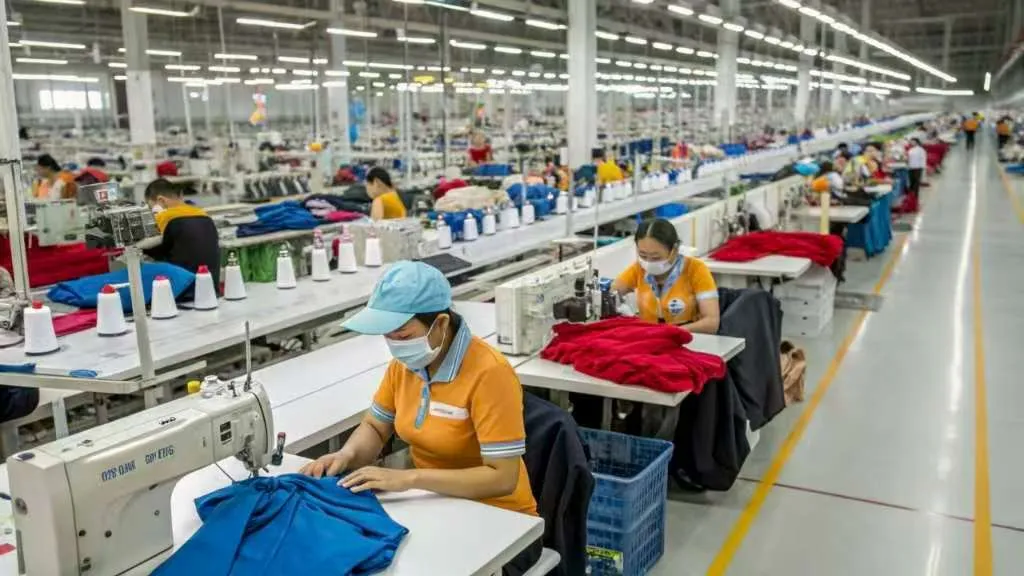
Large factories are designed for efficiency and scale.
But for startups, this creates challenges:
High MOQ Requirements
- Often 500–2000+ pieces
- High upfront investment
Limited Flexibility
- Hard to make changes
- Less support for small brands
Communication Barriers
- Multiple layers of management
- Slower response times
Risk of Overstock
Producing too much before validating demand.
Large factories are built for volume — not for early-stage brands.
What Startups Actually Need
From my experience, startups need:
| Need | Why It Matters |
|---|---|
| Low MOQ | Reduces financial risk |
| Flexibility | Allows product testing |
| Customization | Builds brand identity |
| Guidance | Helps avoid mistakes |
The key is not scale —
it’s adaptability.
Bless Clothing vs Large Factories: Key Differences
| Feature | Bless Clothing | Large Factories |
|---|---|---|
| MOQ | Low (~100 pcs) | High (500–2000+) |
| Flexibility | High | Low |
| Customization | High | Medium |
| Communication | Direct | Layered |
| Risk Level | Low | High |
| Best For | Startups & growing brands | Large brands |
Detailed Comparison: Where Each Option Wins
1. Cost vs Risk
- Large factories → lower cost per unit
- Bless Clothing → lower total risk
From my experience, startups benefit more from risk reduction than cost savings.
2. Speed & Adaptability
- Bless Clothing → faster adjustments and iteration
- Large factories → slower changes due to scale
3. Product Development
- Bless Clothing → supports sampling and refinement
- Large factories → focus on production, not development
4. Long-Term Scalability
- Bless Clothing → supports gradual scaling
- Large factories → best for high-volume production
Real Scenario: Startup Decision Example
A startup brand faces two options:
Option 1: Large Factory
- MOQ: 1000 pcs
- Lower cost per unit
- High financial risk
Option 2: Bless Clothing
- MOQ: ~100 pcs
- Higher unit cost
- Lower overall risk
Outcome:
From my experience, most successful startups choose:
- Smaller initial production
- Faster iteration
- Gradual scaling
Pros & Cons for Startups
Bless Clothing
Pros
- Low MOQ
- Flexible production
- Strong customization
- Better communication
Cons
- Higher unit cost
- Not ideal for massive production
Large Factories
Pros
- Lower cost at scale
- High production capacity
Cons
- High MOQ
- Limited flexibility
- Higher financial risk
When to Choose Bless Clothing vs Large Factories
Choose Bless Clothing If:
- You are launching a new brand
- You want to test products
- You need customization and flexibility
- You want controlled production
Choose Large Factories If:
- You have proven demand
- You need high-volume production
- Cost per unit is your priority
FAQs
Is Bless Clothing better for startups?
Yes — especially due to flexibility and low MOQ.
What is your MOQ?
Typically around 100 pieces per design.
Can I scale later?
Yes — production can increase as your brand grows.
Is large factory production cheaper?
Yes per unit — but higher total risk.
How fast is production?
- Samples: 5–7 days
- Bulk: 20–35 days
Conclusion
So, is Bless Clothing better for startups than large factories?
In most cases, yes — because startups need flexibility, not scale.
From my experience, the smartest approach is:
Start small → test → refine → scale
And that’s exactly what Bless Clothing is designed to support.