
The best fabrics for casual clothing include cotton jersey, interlock, French terry, fleece, rib knit, poplin, twill, stretch woven, and linen blends.
However, the right choice depends on the garment, climate, customer, care requirements, and target price.
From my experience developing casualwear, many brands focus only on fiber content. They ask whether cotton or polyester is better but overlook fabric construction, weight, finishing, shrinkage, and recovery.
The best casualwear fabric is not simply the softest material. It is the fabric that provides the right comfort, shape, durability, and care performance for the finished garment.
This guide compares practical fabric options and helps you choose the right one for T-shirts, hoodies, shirts, pants, jackets, and loungewear.
Table of Contents
- Quick Answer
- Fabric vs Fiber
- Best Casual Clothing Fabrics
- Best Fabric by Product
- Choose by Climate and Lifestyle
- Stock vs Custom Fabric
- How to Evaluate Fabric
- Fabric Specification Checklist
- Common Selection Mistakes
- FAQ
- Conclusion
Quick Answer
Here are nine practical fabrics for casual clothing:
| Fabric | Best For | Main Benefit |
|---|---|---|
| Single Jersey | T-shirts and lightweight tops | Soft and versatile |
| Interlock | Premium tops and polos | Smooth and stable |
| French Terry | Hoodies and joggers | Comfortable without excessive warmth |
| Brushed Fleece | Winter sweatshirts | Warm and soft |
| Rib Knit | Fitted tops, cuffs, and waistbands | Stretch and recovery |
| Poplin or Oxford | Casual shirts | Clean and breathable |
| Twill | Pants, shorts, and overshirts | Durable and structured |
| Stretch Woven | Travel pants and lightweight jackets | Movement and easy care |
| Linen Blend | Summer shirts and pants | Breathable and relaxed |
My practical recommendations are:
- Choose cotton jersey for everyday T-shirts.
- Choose French terry for medium-weight hoodies.
- Choose fleece for warmer sweatshirts.
- Choose twill for durable casual pants.
- Choose poplin or Oxford for shirts.
- Choose stretch woven for travel and commuter clothing.
- Choose linen blends for hot-weather collections.
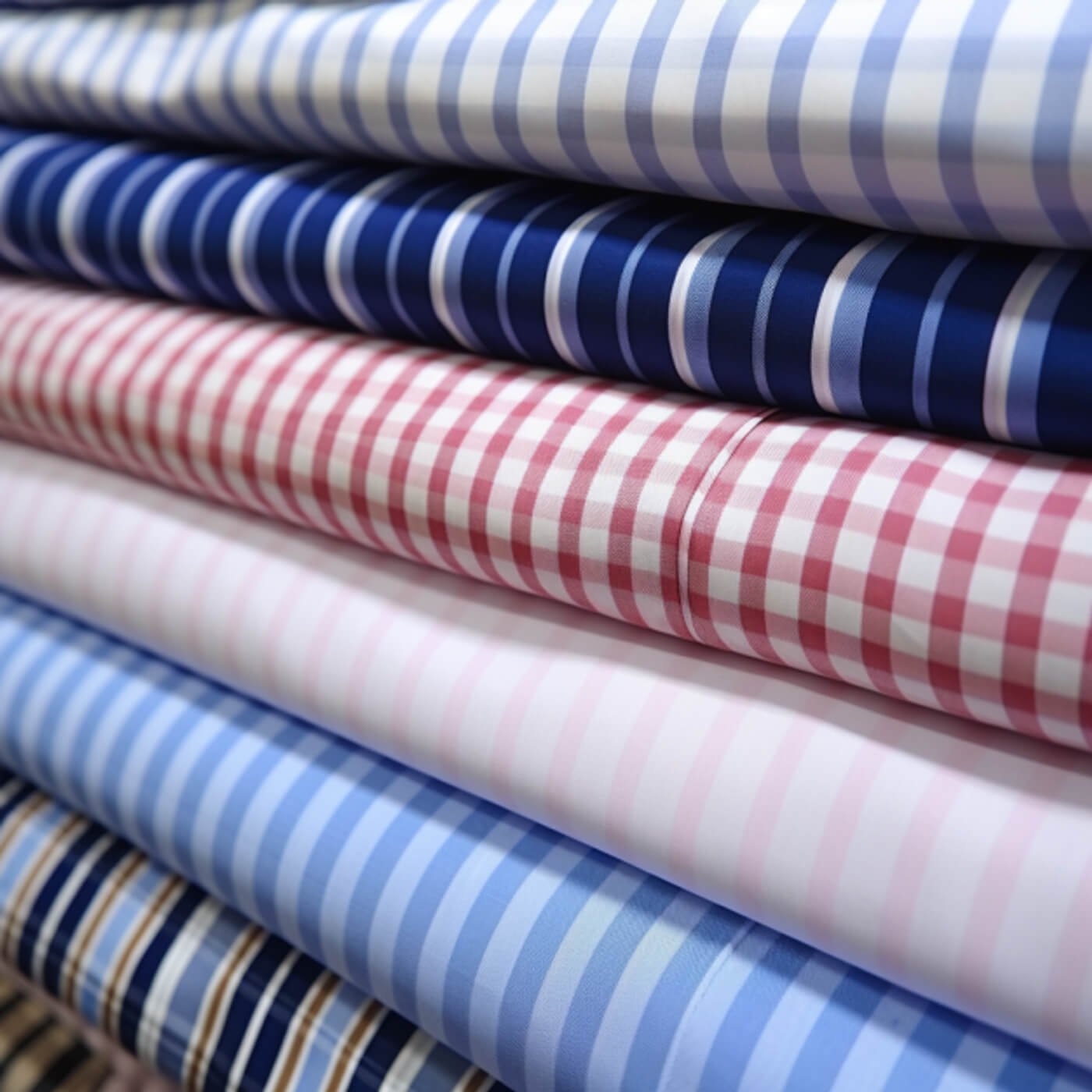
Brands can compare available constructions through the Custom Fabric Catalog.
Fabric vs Fiber
A fiber is the raw material. A fabric is the material construction created from fibers and yarns.
Common fibers include:
- Cotton
- Polyester
- Nylon
- Linen
- Wool
- Modal
- Lyocell
- Elastane
Common fabric constructions include:
- Jersey
- Interlock
- Rib
- French terry
- Fleece
- Poplin
- Oxford
- Twill
- Canvas
This distinction matters because two fabrics with the same fiber content can perform differently.
For example, 100% cotton can be made into:
- Soft T-shirt jersey
- Heavy canvas
- Casual shirt poplin
- Durable twill
- Warm French terry
Fiber content tells you what the fabric contains. Fabric construction tells you how it is likely to behave.
Best Casual Clothing Fabrics
1. Single Jersey
Single jersey is widely used for:
- T-shirts
- Tank tops
- Long-sleeve tops
- Lightweight dresses
- Loungewear
It may be made from cotton, polyester, modal, or blended fibers.
Advantages:
- Soft against the skin
- Comfortable stretch
- Suitable for printing
- Available in many weights
- Practical for everyday basics
Check before ordering:
- Shrinkage
- Side-seam twisting
- Opacity
- Neckline recovery
- Surface pilling
Choose lightweight jersey for summer tops and denser jersey for premium or structured T-shirts.
2. Interlock
Interlock is a double-knit fabric with a smooth surface on both sides.
It is suitable for:
- Premium T-shirts
- Polo shirts
- Structured tops
- Casual dresses
- Baby or soft casualwear
Compared with basic jersey, interlock is usually:
- More stable
- Less transparent
- Smoother
- More structured
- Less likely to curl at the edges
It may also be heavier and more expensive.
Choose interlock when you want a cleaner, more refined casual product.
3. French Terry
French terry has a smooth outer surface and visible loops on the inside.
It is commonly used for:
- Hoodies
- Sweatshirts
- Joggers
- Casual shorts
- Matching sets
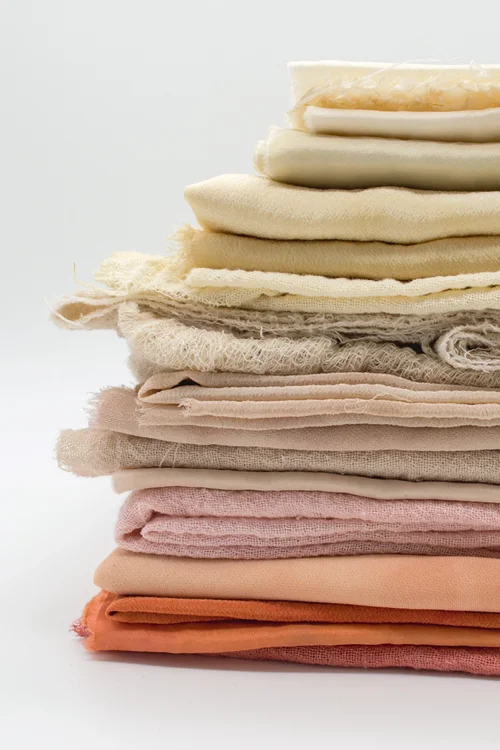
French terry offers comfort without the heavy warmth of brushed fleece.
It is suitable for:
- Mild climates
- Transitional seasons
- Lightweight layering
- Year-round casual collections
Check its shrinkage, loop stability, pilling, and recovery before bulk production.
4. Brushed Fleece
Brushed fleece is normally brushed on the inside to create softness and warmth.
It works well for:
- Winter hoodies
- Sweatshirts
- Sweatpants
- Warm matching sets
| Requirement | French Terry | Brushed Fleece |
|---|---|---|
| Warmth | Medium | High |
| Interior | Looped | Brushed |
| Best Season | Spring and autumn | Autumn and winter |
| Breathability | Higher | Lower |
| Product Weight | Light to medium | Medium to heavy |
Choose fleece when warmth is a main product benefit.
Avoid using very heavy fleece for customers in hot or humid markets.
5. Rib Knit
Rib knit has raised vertical lines and natural stretch.
It can be used for:
- Fitted tops
- Tank tops
- Cardigans
- Cuffs
- Necklines
- Waistbands
The most important quality area is recovery.
Poor rib fabric may cause:
- Loose necklines
- Stretched cuffs
- Baggy fitted tops
- Weak waistbands
Stretch the fabric and check whether it returns to its original shape.
For cuffs and waistbands, the rib must also work correctly with the main garment fabric.
6. Poplin and Oxford
Poplin and Oxford are commonly used for casual shirts.
Poplin
Poplin is usually:
- Smooth
- Lightweight
- Clean-looking
- Suitable for warm weather
Oxford
Oxford is normally:
- More textured
- Slightly heavier
- More casual
- Suitable for everyday shirts
| Product Direction | Better Option |
|---|---|
| Lightweight summer shirt | Poplin |
| Clean button-up shirt | Poplin |
| Casual everyday shirt | Oxford |
| Structured overshirt | Heavier Oxford or twill |
Check shrinkage, wrinkling, collar stability, and colorfastness before approval.
7. Twill
Twill has a visible diagonal surface structure.
It is widely used for:
- Casual pants
- Chinos
- Shorts
- Overshirts
- Utility jackets
Its main advantages include:
- Durability
- Structure
- Good drape
- Wide weight range
- Suitability for garment washing
Cotton twill provides a natural hand feel, while cotton-elastane twill adds movement and comfort.
Choose twill when the garment needs more structure than jersey but should remain comfortable for daily use.
8. Stretch Woven Fabric
Stretch woven fabric is useful for casual garments that need movement without looking like sportswear.
It is suitable for:
- Travel pants
- Commuter trousers
- Lightweight jackets
- Casual shorts
- Easy-care overshirts
It may contain polyester, nylon, cotton, and elastane.
Possible benefits include:
- Stretch
- Recovery
- Quick drying
- Wrinkle resistance
- Lightweight durability
Do not assume that every stretch woven fabric has strong recovery. Test whether it becomes baggy after repeated movement.
9. Linen Blends
Linen blends work well for warm-weather casual clothing.
Common products include:
- Summer shirts
- Relaxed trousers
- Shorts
- Dresses
- Lightweight jackets
Pure linen offers airflow and natural texture but wrinkles easily.
Blending linen with cotton, viscose, or lyocell may improve:
- Softness
- Drape
- Wrinkle behavior
- Comfort
- Production stability
Choose pure linen when natural texture is part of the design.
Choose a linen blend when easier care and softness matter more.
Best Fabric by Product
| Product | Recommended Fabric |
|---|---|
| Basic T-shirt | Cotton jersey |
| Premium T-shirt | Dense jersey or interlock |
| Lightweight Hoodie | French terry |
| Winter Hoodie | Brushed fleece |
| Sweatshirt | French terry or fleece |
| Fitted Top | Rib knit |
| Casual Shirt | Poplin or Oxford |
| Overshirt | Oxford, twill, or canvas |
| Casual Pants | Cotton twill or stretch woven |
| Joggers | French terry or fleece |
| Summer Shorts | Cotton twill or linen blend |
| Travel Pants | Stretch woven |
| Lightweight Jacket | Nylon, polyester, or twill |
| Loungewear | Cotton jersey, rib, modal, or French terry |
Brands can review suitable garment categories through the Custom Clothing Products Catalog.
Choose by Climate and Lifestyle
For Hot Climates
Choose:
- Lightweight cotton jersey
- Poplin
- Linen blends
- Lightweight lyocell
- Breathable stretch woven
Focus on airflow, weight, skin comfort, and easy washing.
For Cold Climates
Choose:
- Brushed fleece
- Heavy French terry
- Wool blends
- Dense interlock
- Layered woven fabrics
For Travel Clothing
Choose:
- Stretch woven
- Cotton-polyester blends
- Wrinkle-resistant fabrics
- Lightweight nylon
- Merino blends
For Frequent Washing
Choose fabrics with tested:
- Shrinkage control
- Colorfastness
- Shape retention
- Pilling resistance
- Seam compatibility
The CottonWorks Quality Assurance Basics provides additional textile testing and quality-control guidance.
Stock vs Custom Fabric
| Factor | Stock Fabric | Custom Fabric |
|---|---|---|
| Lead Time | Shorter | Longer |
| MOQ | Usually lower | Usually higher |
| Color Choice | Existing colors | Custom colors possible |
| Product Difference | Limited | Greater |
| Development Risk | Lower | Higher |
| Best For | First collections | Proven or signature products |
Choose Stock Fabric When
- You are testing a new product.
- You need a shorter production timeline.
- Your quantity is limited.
- An available fabric meets the requirements.
Choose Custom Fabric When
- Fabric is a main product advantage.
- You need a special weight or texture.
- Existing colors are unsuitable.
- You expect repeat orders.
- Your quantity can support development minimums.
For special compositions, weights, colors, structures, or finishes, review Custom Fabric Development.
For most first collections, I recommend beginning with proven stock fabrics and developing exclusive materials after demand is clearer.
How to Evaluate Fabric
Do not approve fabric from a photograph or composition description alone.
Use four checks.
1. Swatch Check
Review:
- Hand feel
- Weight
- Surface
- Color
- Stretch
- Recovery
- Opacity
- Drape
2. Garment Sample
Confirm:
- Fit
- Shape
- Comfort
- Seam behavior
- Printing or embroidery
- Overall appearance
3. Wash Test
Check:
- Shrinkage
- Twisting
- Fading
- Pilling
- Recovery
- Surface appearance
The ISO 5077 Dimensional Change Standard provides a method for measuring dimensional changes after washing and drying.
4. Bulk Fabric Check
Before cutting, compare bulk fabric with the approved swatch and sample.
Check:
- Color
- Shade variation
- GSM
- Width
- Shrinkage
- Surface defects
A structured Quality Control Service helps identify material differences before they affect the complete order.
Fabric Specification Checklist
Provide manufacturers with a clear fabric specification.
| Requirement | Example |
|---|---|
| Product | Relaxed casual T-shirt |
| Fiber | 100% cotton |
| Construction | Single jersey |
| Weight | 240 GSM |
| Hand Feel | Smooth and slightly firm |
| Stretch | Natural mechanical stretch |
| Color | Black |
| Finish | Compacted |
| Decoration | Screen printing |
| Performance | Controlled shrinkage and pilling |
| Quantity | Based on 300 garments |
Also confirm:
- Usable width
- MOQ
- Price
- Lead time
- Color minimum
- Reorder availability
- Bulk tolerance
- Supporting test results
The Textile Exchange Materials Resource provides information about major fiber categories used in apparel.
Common Selection Mistakes
Choosing by Softness Alone
Very soft fabric may pill, lose shape, or lack the structure needed for the garment.
Believing Higher GSM Means Better Quality
GSM measures weight, not complete fabric quality.
Ignoring Fabric Construction
Cotton jersey and cotton canvas may have the same fiber content but completely different uses.
Approving Only a Small Swatch
A swatch cannot fully show fit, drape, seams, or wash performance.
Using Too Many Fabrics
A first collection with many materials may create higher MOQs, testing costs, and color-matching problems.
Changing Fabric After Sample Approval
A new fabric may change measurements, fit, printing, sewing, and washing results.
Ignoring Label Requirements
Brands selling clothing in the United States should review the FTC Clothing and Textiles Guidance before approving fiber-content and care labels.
FAQ
What is the best overall fabric for casual clothing?
Cotton jersey is one of the most versatile options for casual tops. However, the best fabric depends on the specific garment and customer.
What fabric is best for casual T-shirts?
Choose cotton jersey for a natural feel, interlock for greater stability, or a cotton blend for easier care and shape retention.
What fabric is best for hoodies?
French terry works well for lightweight and transitional hoodies. Brushed fleece is better for warmer products.
What fabric is best for casual pants?
Cotton twill is durable and versatile. Stretch woven fabric is useful when movement and easy care are priorities.
What is the best fabric for summer clothing?
Lightweight cotton, poplin, linen blends, and breathable lyocell fabrics are practical options.
Is polyester suitable for casual clothing?
Yes. Polyester and polyester blends can improve durability, drying speed, wrinkle resistance, and shape retention.
Is heavier fabric always better?
No. A heavier fabric may provide structure but can also feel too warm or stiff for the intended product.
Should a new brand use custom fabric?
A new brand should normally begin with a proven fabric unless a custom material provides an important and testable product advantage.
Should every fabric be wash-tested?
Important fabrics should be tested before bulk production, especially when shrinkage, color, pilling, or shape retention could affect the product.
Can Bless Clothing help select casualwear fabrics?
Bless Clothing supports brands with fabric sourcing, custom material development, garment sampling, OEM and ODM manufacturing, and bulk quality control.
Conclusion
The best fabrics for casual clothing depend on the product and customer.
Choose:
- Jersey for everyday T-shirts
- Interlock for stable premium tops
- French terry for lightweight hoodies
- Fleece for warm sweatshirts
- Rib knit for stretch and recovery
- Poplin or Oxford for casual shirts
- Twill for durable pants and overshirts
- Stretch woven for travel clothing
- Linen blends for summer collections
From my experience, the safest fabric decision is based on the completed garment rather than the fiber name alone.
Confirm the construction, weight, finish, comfort, durability, wash performance, and bulk consistency before production.
Bless Clothing helps casualwear brands select fabrics, develop physical samples, manufacture custom products, and inspect bulk orders before delivery.