
Choosing your product lineup isn't just about what looks "cool." It’s a high-stakes balancing act between market demand, production feasibility, and profit margins. If you pick the wrong items, you’re left with a warehouse full of dead stock. If you pick the right ones, you build a loyal community that waits for every drop.
At Bless Clothing, I’ve helped hundreds of founders navigate this exact crossroad. I’ve seen brands skyrocket by launching just the right oversized hoodie, and others struggle because they tried to do too much, too soon. Here is my insider framework for selecting products that sell.
Table of Contents
- Quick Answer: The "Hero Product" Rule
- Step 1: Analyzing Market Demand vs. Brand DNA
- Step 2: Technical Feasibility (Can it be made?)
- Step 3: Calculating the "Profitability Floor"
- Comparison: Core Basics vs. Seasonal Trend Pieces
- Decision Matrix: Finding Your First 3 Products
- FAQs: Common Product Selection Mistakes
- Build Your Winning Collection with Bless Clothing
Quick Answer
To choose the right products, follow the 80/20 Rule: 80% of your revenue will likely come from 20% of your products. Start with a Hero Product—a high-demand, low-complexity item like a custom oversized hoodie or a premium heavy-weight tee—that solves a specific fit or quality problem for your audience. Use a manufacturer that offers flexible sampling to test three variations before committing to bulk. Success lies in being "the best at one thing" rather than "average at everything."
1. Analyzing Market Demand vs. Brand DNA
I always tell my clients: "Don't build a product for everyone; build it for someone."
- Social Listening: Check platforms like TikTok Creative Center to see which silhouettes are actually trending in real-time.
- The "Gap" Analysis: Buy your competitor's best-selling item. Is the neck too loose? Is the fabric too thin? Your product should be the "fixed" version of theirs.
- Lifestyle Alignment: If your brand is about "Digital Nomadism," lightweight, wrinkle-resistant fabrics are a must. If it’s "Streetwear," focus on heavy GSM and dropped shoulders.

2. Technical Feasibility: Can it be Made Well?
A great idea on paper can be a nightmare on the sewing line. When selecting products, consider the garment construction complexity.
- Complexity vs. Consistency: A standard hoodie is easy to scale. A jacket with 12 asymmetrical zippers and mixed-media fabrics has a high failure rate in mass production.
- Fabric Availability: Does your chosen product require a proprietary fabric blend, or can it be made from high-quality "greige" stock? Using available fabrics speeds up your time-to-market by 4–6 weeks.
- Decoration Limits: Not all products handle all techniques. High-stretch fabrics might ruin a heavy puff print. Always consult your factory's technical team during the selection phase.
3. Calculating the "Profitability Floor"
If your COGS (Cost of Goods Sold) is too high, your brand won't survive the first year.
- The 3x Rule: Your retail price should ideally be at least 3x your production cost to cover marketing, shipping, and overhead.
- Shipping Weight: Heavy-weight fleece is popular but costs more to ship internationally via Express Air. Factor this into your product choice if you plan on global shipping.
4. Comparison: Core Basics vs. Seasonal Trend Pieces
| Feature | Core Basics (The "Bread") | Trend Pieces (The "Butter") |
|---|---|---|
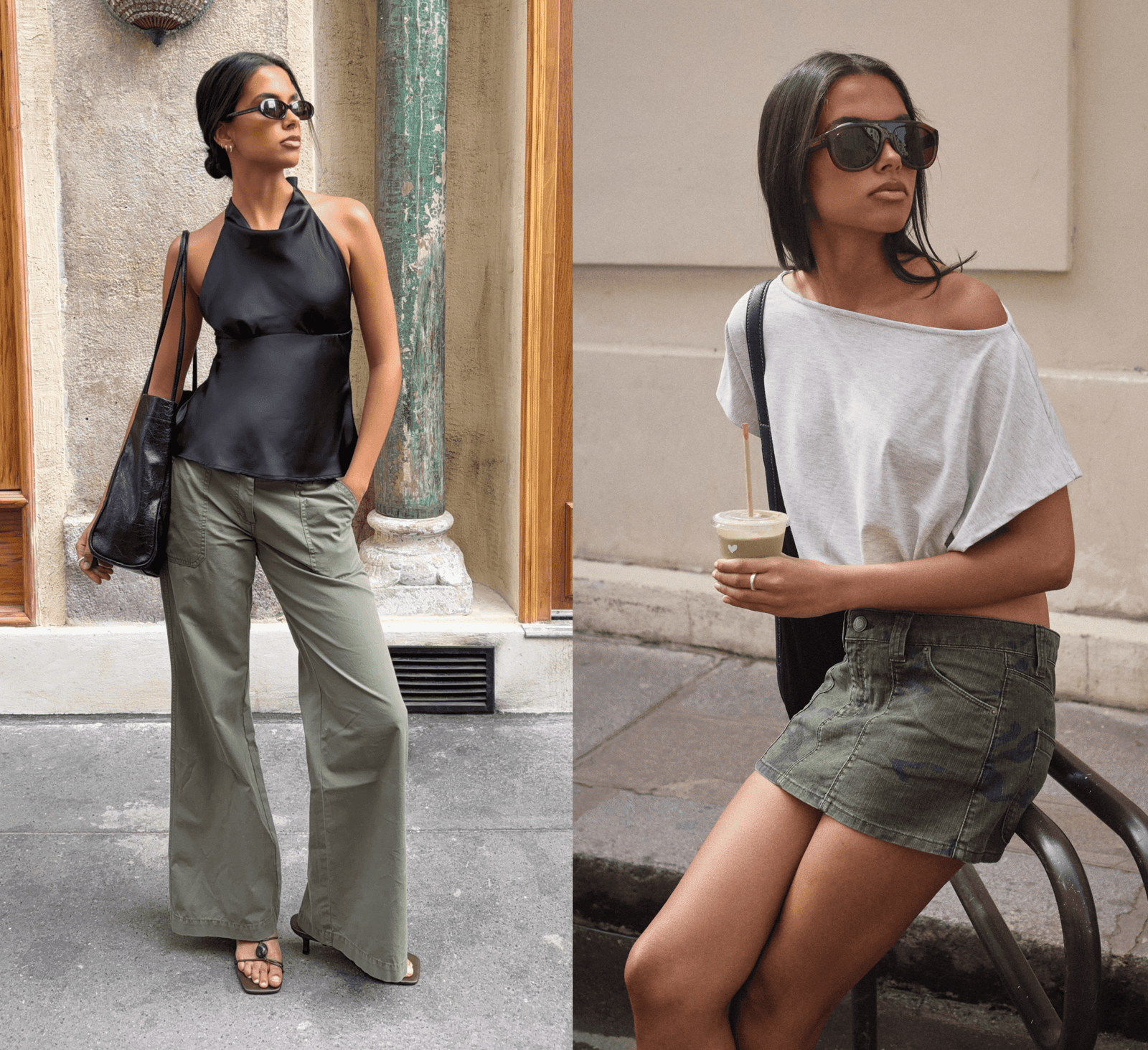
| Examples | Black Tees, Grey Hoodies | Neon Mesh Tops, Cargo Skirts |
| Risk Level | Low (Never goes out of style) | High (Trends fade in 3-6 months) |
| Inventory | Can be restocked year-round | Limited drops only |
| Marketing | Focus on Quality/Fit | Focus on Hype/Vibe |
| Profit Margin | Consistent, moderate | High, but volatile |
5. Decision Matrix: Finding Your First 3 Products
Use this matrix to filter your ideas. Rate each idea from 1–5:
| Potential Product | Market Demand | Ease of Production | Profit Margin | Total Score |
|---|---|---|---|---|
| Oversized Tee | 5 | 5 | 4 | 14 (Winner) |
| Standard Hoodie | 5 | 4 | 4 | 13 (Runner up) |
| Technical Windbreaker | 3 | 2 | 5 | 10 (Wait) |
Strategic Advice: If you are just starting, only launch products with a total score of 12 or higher. At Bless Clothing, we recommend starting with high-score essentials to build cash flow before moving into complex "experimental" pieces.
6. FAQs: Common Product Selection Mistakes
Q: Should I launch a full collection or just one item?
A: Launching 1–3 perfected items is almost always better than 10 mediocre ones. It focuses your marketing budget and makes inventory management much simpler.
Q: How do I know if my fabric choice is "too expensive"?
A: If your fabric cost forces your retail price to be 50% higher than your direct competitors without a clear functional benefit, it’s too expensive. Use standardized fabric weights to keep costs predictable.
Q: Is "Sustainability" a product feature or a brand requirement?
A: Increasingly, it's a requirement. Choosing Organic Cotton or Recycled Polyester as your base material can be the deciding factor for modern Gen Z consumers.
Build Your Winning Collection with Bless Clothing
The "right" product is the one that sits at the intersection of what your customers want and what you can reliably produce. Don't let the paradox of choice paralyze your brand's growth.
Not sure which fabric or fit will work for your niche?
Talk to a product expert at Bless Clothing. We don’t just manufacture; we help you curate a product lineup designed for high sell-through and long-term brand loyalty. Let’s build your hero product together.