
MOQ is one of the first questions every clothing brand asks when looking for a casual wear manufacturer.
Many new brands contact suppliers and immediately ask:
"What is your MOQ?"
But understanding MOQ is more complicated than simply knowing a number. The right MOQ depends on your product type, fabric choice, customization level, production method, and business stage.
From my experience working with apparel brands, I have found that many startups misunderstand MOQ. Some choose manufacturers only because they offer a low MOQ, while others order too much inventory before testing their products.
The goal is not to find the lowest MOQ. The goal is to find the MOQ that allows your brand to balance product quality, production cost, inventory risk, and future growth.
In this guide, I will explain what casual wear MOQ means, how manufacturers calculate it, what quantities are realistic for different brands, and how to choose the right production volume.
Table of Contents
- Quick Answer
- What Does MOQ Mean in Casual Wear Manufacturing?
- Why Do Clothing Manufacturers Have MOQ Requirements?
- Typical MOQ for Casual Wear Products
- Factors That Affect Casual Wear MOQ
- MOQ Differences Between Products
- How Startups Should Choose MOQ
- Low MOQ vs High MOQ Manufacturing
- How to Reduce MOQ Requirements
- Common MOQ Mistakes Brands Make
- How Bless Clothing Supports Growing Brands
- FAQs
- Final Thoughts
Quick Answer
Casual wear MOQ (Minimum Order Quantity) is the minimum number of garments a manufacturer requires for one production order.
Typical MOQ ranges:
| Product | Common MOQ Range |
|---|---|
| T-Shirts | 100–300 pcs/style |
| Hoodies | 100–500 pcs/style |
| Sweatshirts | 100–500 pcs/style |
| Joggers | 100–300 pcs/style |
| Jackets | 100–500 pcs/style |
| Lounge Sets | 100–300 pcs/style |
For startups, a practical starting point is usually 100–300 pieces per style, depending on customization requirements.
What Does MOQ Mean in Casual Wear Manufacturing?
MOQ stands for Minimum Order Quantity.
It means the smallest quantity a manufacturer is willing to produce for a specific product.
For example:
If a casual wear manufacturer has an MOQ of 100 pieces per style, you need to order at least:
- 100 hoodies in one design
- 100 sweatshirts in one design
- 100 joggers in one design
MOQ is usually calculated by:
- Product style
- Fabric usage
- Production process
- Customization requirements
- Factory efficiency
Why Do Clothing Manufacturers Have MOQ Requirements?
Many new brands ask:
"Why can't factories make only 20 pieces?"
The reason is production cost.
Garment manufacturing involves fixed preparation costs, including:
- Pattern making
- Fabric ordering
- Machine setup
- Cutting preparation
- Production planning
- Quality inspection
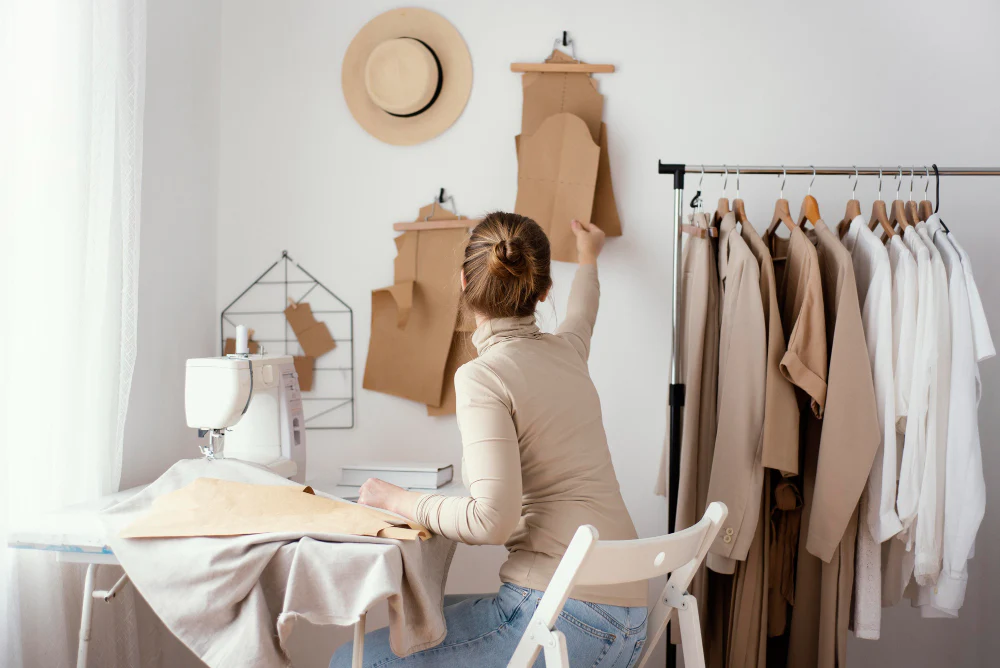
Whether producing 50 pieces or 500 pieces, many preparation steps remain the same.
A higher quantity helps manufacturers spread these costs across more units.
Typical MOQ for Casual Wear Products
MOQ varies depending on the product category.
T-Shirts
T-shirts usually have lower MOQ because:
- Simple construction
- Easier production
- Lower material complexity
Typical MOQ:
100–300 pieces per style
Hoodies and Sweatshirts
Hoodies often require higher MOQ because they involve:
- More fabric usage
- More sewing operations
- Higher material cost
Typical MOQ:
100–500 pieces per style
Jackets and Outerwear
Outerwear usually requires more development because of:
- Complex construction
- Multiple components
- Hardware accessories
Typical MOQ:
100–500 pieces per style
Factors That Affect Casual Wear MOQ
MOQ is not fixed. Several factors influence production quantity.
Fabric Selection
Fabric is one of the biggest factors.
Common situations:
| Fabric Choice | MOQ Impact |
|---|---|
| Standard fabric | Lower MOQ |
| Custom dyed fabric | Higher MOQ |
| Special fabric development | Higher MOQ |
For example, custom colors may require minimum fabric dye quantities.
Customization Level
More customization often increases MOQ.
Examples:
Lower MOQ:
- Standard fabric
- Basic colors
- Simple labels
Higher MOQ:
- Custom fabric
- Special washing
- Custom trims
- Unique construction
Product Complexity
Simple garments usually have lower MOQ.
| Product Complexity | MOQ Level |
|---|---|
| Basic T-shirt | Lower |
| Hoodie | Medium |
| Jacket | Higher |
| Technical apparel | Higher |
MOQ Differences Between Products
Different casual wear products require different production planning.
| Product | Difficulty | MOQ Consideration |
|---|---|---|
| Basic Tee | Low | Easier to start |
| Oversized Hoodie | Medium | More fabric required |
| Washed Sweatshirt | Medium | Requires finishing |
| Denim Jacket | High | More processes |
| Custom Outerwear | High | Complex production |
How Startups Should Choose MOQ
For new brands, choosing the correct MOQ is extremely important.
Ordering too little can increase costs.
Ordering too much can create inventory problems.
A good starting strategy:
| Brand Stage | Recommended Quantity |
|---|---|
| Testing New Idea | 50–100 pcs |
| First Collection | 100–300 pcs |
| Growing Brand | 300–1000 pcs |
| Established Brand | 1000+ pcs |
Low MOQ vs High MOQ Manufacturing
| Low MOQ | High MOQ |
|---|---|
| Lower investment | Lower unit cost |
| Less inventory risk | Better production efficiency |
| Higher unit price | Better pricing |
| Good for testing | Good for scaling |
The best choice depends on your business stage.
How to Reduce MOQ Requirements
If your brand is new, there are several ways to work with lower MOQ.
Choose Existing Fabrics
Using available fabrics can reduce:
- Material cost
- Preparation time
- Minimum requirements
Limit Color Options
Multiple colors increase complexity.
Starting with fewer colors can make production easier.
Simplify Custom Details
Avoiding unnecessary details can reduce development requirements.
Examples:
- Standard buttons
- Existing trims
- Simple packaging
Start With Core Products
Instead of launching 20 products, focus on:
- One strong hoodie
- One signature T-shirt
- One popular bottom style
Common MOQ Mistakes Brands Make
Choosing a Manufacturer Only Because of Low MOQ
Low MOQ does not always mean better.
You should also evaluate:
- Quality
- Experience
- Communication
- Production ability
Ordering Too Much Too Early
Large inventory can create:
- Cash flow pressure
- Storage problems
- Slow product testing
Ignoring Future Growth
Choose a partner who can support your brand as orders increase.
Not Understanding MOQ Details
Always confirm:
- MOQ per style
- MOQ per color
- MOQ per size
- Fabric requirements
How Bless Clothing Supports Growing Brands
At Bless Clothing, we help casual wear brands choose production quantities that match their business stage.
Our support includes:
- Product development
- Fabric sourcing
- MOQ consultation
- Sample production
- Private label manufacturing
- Quality inspection
- Bulk production
Helpful Resources:
- Private Label Clothing Manufacturer
- Custom Fabric Solutions
- OEM & ODM Services
- Quality Control Services
Industry Reference:
We help startups and growing brands find practical production solutions without unnecessary inventory risk.
FAQs
What is the average MOQ for casual wear?
Most casual wear manufacturers require around 100–300 pieces per style, depending on product complexity and customization.
Can I order custom clothing with a low MOQ?
Yes. Some manufacturers offer lower MOQ options, especially when using existing fabrics and simpler customization.
Is a lower MOQ always better?
Not necessarily. Lower MOQ reduces risk but may increase unit costs.
Why do manufacturers require MOQ?
MOQ helps manufacturers cover production preparation costs and maintain efficient operations.
How can startups reduce MOQ?
Startups can reduce MOQ by using standard fabrics, fewer colors, simpler designs, and focusing on core products.
Final Thoughts
Understanding MOQ is essential when building a casual wear brand.
The right MOQ is not the smallest possible quantity. It is the quantity that allows your brand to:
- Maintain product quality
- Control investment
- Reduce inventory risk
- Grow sustainably
For startups, starting with a manageable quantity and scaling based on customer demand is usually the safest approach.
If you are looking for a casual wear manufacturing partner with flexible production solutions, visit Bless Clothing to learn how we help brands develop and manufacture custom apparel.