
Cut and sew clothing is made from fabric according to your own pattern and specifications. Wholesale clothing is an existing finished product that you purchase and resell, sometimes with a logo or new packaging.
From my experience working with apparel brands, neither option is automatically better.
Choose cut and sew when the product itself makes your brand different. Choose wholesale clothing when speed, simplicity, and lower development risk matter more.
This guide compares both options by cost, customization, MOQ, quality, lead time, and business stage.
Table of Contents
- Quick Answer
- What Is Cut and Sew Clothing
- What Is Wholesale Clothing
- Main Differences
- Product Control and Customization
- Cost and Cash Flow
- MOQ and Inventory Risk
- Production Time
- Quality and Reorder Consistency
- Which Option Fits Your Brand
- The Hybrid Approach
- Cut and Sew Readiness Test
- Questions to Ask Suppliers
- Common Mistakes
- FAQ
- Conclusion
Quick Answer
The main difference is when the product is created.
With cut and sew manufacturing, fabric is cut into pattern pieces and sewn into a garment made for your brand.
With wholesale clothing, the garment has already been designed and manufactured before you purchase it.
| Priority | Better Choice |
|---|---|
| Fast launch | Wholesale clothing |
| Small market test | Wholesale clothing |
| Unique fit | Cut and sew |
| Custom fabric | Cut and sew |
| Lower development cost | Wholesale clothing |
| Original construction | Cut and sew |
| Simple logo merchandise | Wholesale clothing |
| Long-term signature product | Cut and sew |
My practical recommendation is simple:
- Use wholesale clothing to test an idea quickly.
- Use cut and sew to build products customers cannot easily find elsewhere.
- Use a hybrid approach when you want to control risk while developing your brand.
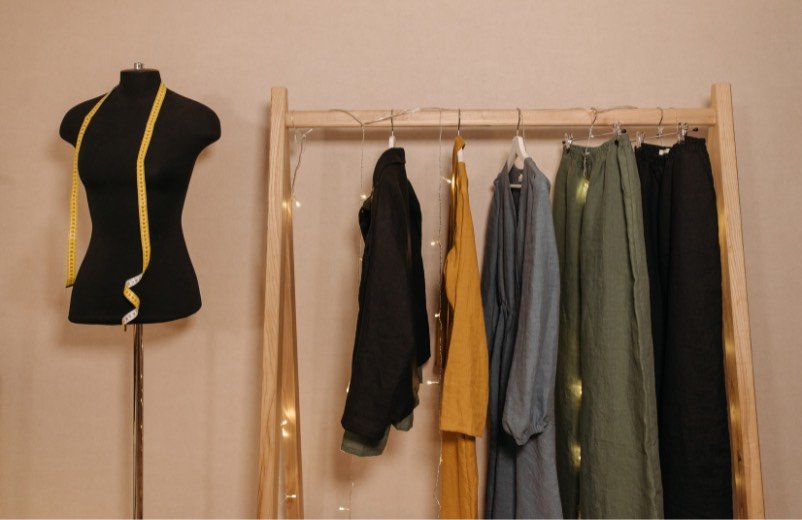
What Is Cut and Sew Clothing?
Cut and sew clothing is produced from individual fabric pieces using a brand's pattern, measurements, and construction requirements.
The process usually includes:
- Product specification
- Fabric selection
- Pattern development
- Sample making
- Fit revisions
- Fabric cutting
- Printing or embroidery
- Sewing
- Quality inspection
- Packing
A cut and sew brand can normally control:
- Fabric composition and weight
- Garment measurements
- Fit and silhouette
- Seams and construction
- Pocket shape and position
- Printing and embroidery
- Labels and trims
- Garment washing
- Packaging
Brands with complete designs can use OEM production, while brands with concepts may need ODM development support.
Both options are explained through OEM and ODM Manufacturing Services.
What Is Wholesale Clothing?
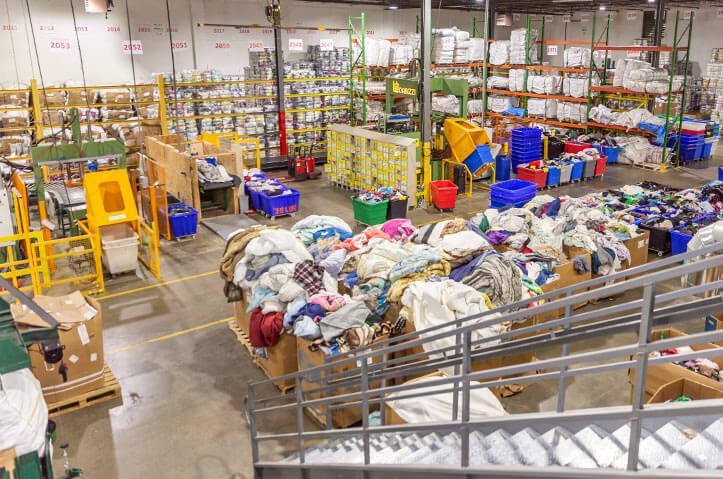
Wholesale clothing is purchased from an existing collection or stock inventory.
The supplier has already decided:
- Pattern
- Fit
- Fabric
- Construction
- Available colors
- Size range
- Product measurements
The buyer may still be able to add:
- Screen printing
- Embroidery
- Heat transfers
- Hang tags
- Stickers
- Simple packaging
However, changing the fabric, pattern, sizing, or construction normally requires a move into cut and sew production.
Wholesale clothing is commonly used for:
- Event merchandise
- Promotional clothing
- Small online stores
- Logo-based collections
- Market testing
- Urgent product launches
Main Differences
| Factor | Cut and Sew | Wholesale Clothing |
|---|---|---|
| Product Design | Developed for your brand | Already designed |
| Pattern | Custom or modified | Fixed |
| Fabric | Selected or developed | Preselected |
| Fit | Brand-controlled | Supplier-controlled |
| Branding | Full customization | Mainly surface branding |
| Sampling | Normally required | Often unnecessary |
| Development Cost | Higher | Lower |
| Launch Speed | Slower | Faster |
| MOQ | Based on materials and production | May allow smaller orders |
| Product Uniqueness | High | Limited |
| Reorder Control | Based on specifications | Depends on available stock |
| Quality Standard | Can be defined by the brand | Set by the supplier |
The key question is not simply which option costs less.
Ask:
Does the existing wholesale product already meet the needs of my customer?
When the answer is yes, wholesale may be enough. When the answer is no, cut and sew gives you more control.
Product Control and Customization
Wholesale clothing mainly allows you to customize the outside appearance.
Cut and sew allows you to change the garment itself.
Wholesale Customization
Common options include:
- Front or back printing
- Chest embroidery
- Patches
- Hang tags
- Packaging stickers
- Promotional inserts
Cut and Sew Customization
Possible options include:
- Original patterns
- Custom measurements
- Exclusive fabric weights
- Custom-dyed colors
- Special necklines
- Pocket development
- Branded zippers and buttons
- Garment washing
- Custom labels and packaging
For example, two brands may purchase the same wholesale hoodie and add different logos. The graphics will differ, but the fit, fabric, hood, rib, and pockets will remain the same.
A cut and sew hoodie can have its own:
- Shoulder width
- Body length
- Hood shape
- Fabric weight
- Rib quality
- Pocket proportions
- Wash finish
Brands can explore possible categories through the Custom Clothing Products Catalog.
Special fabric weights, compositions, textures, and finishes can be developed through Custom Fabric Development.
Cost and Cash Flow
Wholesale clothing normally has lower development costs because the product already exists.
Cut and sew may include additional costs for:
- Pattern development
- Samples
- Sample revisions
- Fabric preparation
- Size grading
- Print setup
- Custom trims
- Testing
- Quality inspection
However, the lowest initial cost is not always the best long-term value.
Hidden Wholesale Costs
Wholesale clothing may create problems when:
- Competitors sell the same garment.
- The supplier changes the fabric.
- A popular color becomes unavailable.
- The fit does not suit your customer.
- Your brand must compete mainly through advertising.
Hidden Cut and Sew Costs
Cut and sew can become expensive when:
- Specifications are unclear.
- The design changes repeatedly.
- Too many colors are developed.
- Custom materials are ordered before demand is tested.
- Samples are approved without proper checking.
Practical Cost Decision
| Situation | Safer Choice |
|---|---|
| Very limited startup budget | Wholesale |
| Testing several graphics | Wholesale |
| Developing one signature product | Cut and sew |
| Fit is a main selling point | Cut and sew |
| Product demand is unknown | Wholesale or semi-custom |
| Product already has strong sales | Cut and sew |
Do not compare only the purchase price.
Compare the cost of creating one finished, sellable garment that customers will want to buy again.
MOQ and Inventory Risk
MOQ means minimum order quantity.
Wholesale products may allow lower quantities because the supplier has already produced the garments.
Cut and sew MOQs are influenced by:
- Fabric minimums
- Custom colors
- Pattern development
- Printing setup
- Trim production
- Cutting preparation
- Sewing-line efficiency
Low MOQ Is Useful When
- You are testing demand.
- You have limited customer data.
- The style is seasonal.
- Your marketing budget is small.
- You expect product changes.
Higher MOQ Is More Practical When
- The product has proven sales.
- You need custom fabric.
- You have wholesale commitments.
- You understand the best-selling sizes.
- The style can be sold over a longer period.
A low MOQ does not automatically mean low risk. A poor wholesale product can still remain unsold.
A higher cut and sew MOQ may be reasonable when the product has already been tested and offers a clear competitive advantage.
Production Time
Wholesale clothing is normally faster because the garments already exist.
The process may only require:
- Product selection
- Stock confirmation
- Logo decoration
- Packing
- Shipping
Cut and sew requires more development stages:
- Product brief
- Fabric sourcing
- Pattern making
- Sample development
- Sample approval
- Bulk material preparation
- Cutting and sewing
- Quality inspection
- Packing and shipping
Choose Wholesale When
- You have a fixed short deadline.
- You need products for an event.
- You are testing a graphic concept.
- The available garment already meets your needs.
Choose Cut and Sew When
- You have time for sampling.
- Fabric and fit are important.
- You plan to reorder the style.
- You want stronger product differentiation.
Do not choose cut and sew when there is no time to develop and approve a proper sample.
Rushing the sample stage removes much of the value of custom manufacturing.
Quality and Reorder Consistency
Cut and## Quality and Reorder Consistency {#quality-and-consistency}
Cut and sew is not automatically higher quality.
Quality depends on the specifications, materials, manufacturing process, and inspections.
Wholesale Quality
Wholesale garments are easier to inspect before purchasing because the product already exists.
However, the buyer may have limited control over:
- Fabric changes
- Measurement tolerances
- Shrinkage
- Production methods
- Future batches
Cut and Sew Quality
A cut and sew brand can establish standards for:
- Fabric weight
- Measurements
- Shrinkage
- Stitching
- Color
- Logo placement
- Trim performance
- Packaging
A clear quality system should include material checks, production inspections, and final inspection.
The ISO Quality Management Guide explains how defined processes and responsibilities support consistent results.
Brands can review a garment-specific inspection process through Quality Control Services.
A custom sample creates the standard. Quality control makes sure bulk production follows it.
Which Option Fits Your Brand?
Choose Cut and Sew If You Need
- A recognizable fit
- Custom fabric
- Original construction
- Exclusive colors
- Better control over sizing
- Repeatable core products
- Full private labeling
- Stronger product differentiation
Choose Wholesale Clothing If You Need
- A fast launch
- Small test quantities
- Lower development costs
- Simple logo customization
- Products for an event
- An existing fit and fabric
- Less production management
Recommendations by Business Type
| Business Type | Recommended Model |
|---|---|
| First-time merchandise seller | Wholesale |
| Influencer testing a logo | Wholesale |
| Startup testing a product category | Wholesale or semi-custom |
| Premium basics brand | Cut and sew |
| Brand solving a fit problem | Cut and sew |
| Retailer adding branded basics | Private label |
| Established brand developing bestsellers | Cut and sew |
| Company ordering promotional clothing | Wholesale |
Before choosing products and quantities, use SBA Market Research Guidance to review demand, customers, and competitors.
The Hybrid Approach
You do not always need to choose one model for the entire brand.
A hybrid approach combines wholesale and cut and sew products.
Example Hybrid Plan
A new brand could:
- Test three graphics on wholesale T-shirts.
- Identify the best-selling design and sizes.
- Collect customer comments about fit and fabric.
- Develop a custom cut and sew T-shirt.
- Move the bestseller into full production.
Another brand might use:
- Cut and sew for signature products
- Wholesale garments for events
- Private label basics for supporting categories
This approach protects cash while allowing the brand to build original products gradually.
Private label can also sit between the two models. It may allow existing garment bases to be customized with new labels, colors, fabrics, or selected measurements.
Learn more through Private Label Clothing Manufacturing.
Cut and Sew Readiness Test
Answer these eight questions.
Give yourself one point for every “yes.”
- Do I know exactly who will buy this product?
- Is fit or fabric an important selling point?
- Do I have clear product measurements?
- Can I afford samples and revisions?
- Can I meet the required MOQ?
- Do I have time for development?
- Have I tested customer demand?
- Do I plan to reorder the product?
Read Your Score
| Score | Recommended Direction |
|---|---|
| 0–2 | Start with wholesale clothing |
| 3–5 | Consider private label or semi-custom production |
| 6–8 | Cut and sew is likely suitable |
A high score does not guarantee success, but it shows that your business is more prepared for custom production.
Questions to Ask Suppliers
Questions for Wholesale Suppliers
- Is the product currently in stock?
- Can it be reordered consistently?
- Can the fabric or measurements change between batches?
- Which colors and sizes are available?
- Can labels be replaced?
- Which printing methods are suitable?
- What is the defect policy?
- Is packaging included?
Questions for Cut and Sew Manufacturers
- Have you produced similar garments?
- What is the MOQ per style and color?
- Can you develop custom patterns?
- Which fabrics are available?
- How are samples reviewed?
- What does the quotation include?
- Which trims can be customized?
- What quality checks happen during production?
- How are bulk garments compared with the approved sample?
- What is the estimated production timeline?
For custom labels, zippers, buttons, cords, and other components, review Customized Accessories and Trims.
For international orders, confirm the shipping term and responsibilities. The International Trade Administration Incoterms Guide explains how trade terms divide tasks, costs, and risks between buyers and sellers.
Common Mistakes
Assuming Cut and Sew Always Means Premium
A custom product can still have poor fabric, fit, stitching, or quality control.
Assuming Wholesale Clothing Is Always Low Quality
Some wholesale garments are well made. The limitation is usually product control, not necessarily quality.
Developing Too Many Custom Products
Start with a focused collection rather than dividing your budget across many untested styles.
Comparing Prices Without Specifications
A wholesale blank and a fully customized garment are not equivalent products.
Compare:
- Fabric
- Fit
- Construction
- Branding
- MOQ
- Inspection
- Packaging
- Shipping
Ignoring Reorder Risk
Ask whether the same wholesale product will remain available and whether future batches will use the same specifications.
Skipping Cut and Sew Samples
A digital mockup cannot confirm fit, fabric feel, seam construction, comfort, or wash performance.
Forgetting Label Requirements
Brands selling clothing in the United States should review the FTC Clothing and Textile Guidance for textile and care-label information.
FAQ
What does cut and sew mean in clothing?
Cut and sew means fabric is cut into pattern pieces and sewn together to create a garment according to specific product requirements.
Is cut and sew the same as custom clothing?
Cut and sew is a common form of custom clothing manufacturing. It allows control over the pattern, fabric, measurements, construction, and branding.
What is wholesale clothing?
Wholesale clothing is existing finished apparel purchased in quantity for resale, decoration, uniforms, or merchandise.
Is cut and sew more expensive than wholesale?
It usually requires more initial development because of patterns, samples, fabric sourcing, and production setup. The final cost depends on the product and quantity.
Which option is better for a startup?
Wholesale or private label is often safer for early market testing. Cut and sew becomes more useful when the brand understands its customer and product direction.
Can wholesale garments have custom labels?
Sometimes. Ask whether the original labels can be removed or replaced and whether the garments can be legally sold under your brand.
Is private label the same as cut and sew?
Not always. Private label may use existing, semi-custom, or fully developed garments. Full cut and sew gives the brand greater control over the product itself.
Do I need a tech pack for cut and sew?
A detailed tech pack is helpful, but some ODM manufacturers can develop products from reference images, samples, and clear requirements.
Can I combine wholesale and cut and sew products?
Yes. Many brands use wholesale products for testing or events and cut and sew manufacturing for signature or proven products.
How do I choose between them?
Choose according to your target customer, budget, timeline, desired product control, expected sales, and ability to manage development.
Conclusion
Cut and sew and wholesale clothing support different business goals.
Choose wholesale clothing when you need:
- Speed
- Simplicity
- Lower development costs
- Smaller market tests
- Basic logo customization
Choose cut and sew when you need:
- Original fit
- Specific fabrics
- Custom construction
- Full brand control
- Repeatable signature products
From my experience, wholesale clothing is useful for proving demand, while cut and sew is stronger for building long-term product identity.
The safest choice is the one that matches your current stage—not the option with the most customization.
Bless Clothing supports apparel brands with product development, cut and sew manufacturing, private labeling, custom fabrics, samplng, quality control, packaging, and global shipping coordination.