
Improving clothing quality control means preventing defects before they spread through the full production order.
From my experience working with clothing brands, many quality problems are not caused by one careless worker. They usually begin with unclear specifications, untested materials, rushed sample approval, or inspections completed too late.
Good clothing quality control does not rely on one final inspection. It controls materials, measurements, workmanship, testing, and documentation throughout production.
This guide explains how to build a practical quality-control system that reduces defects, rework, delays, returns, and customer complaints.
Table of Contents
- Quick Answer
- Build a Clear Quality Standard
- Use an Approved Sample as the Reference
- Control Fabric Before Cutting
- Improve Measurement and Fit Control
- Inspect Production at Four Stages
- Classify Defects Correctly
- Use AQL Sampling Correctly
- Test Washing and Product Performance
- Control Printing, Embroidery, and Trims
- Create Clear Supplier Accountability
- Use Data to Prevent Repeat Problems
- Choose the Right QC Plan
- 30-Day Quality Improvement Plan
- Common Quality Control Mistakes
- Questions to Ask Your Manufacturer
- FAQ
- Conclusion
Quick Answer
To improve clothing quality control:
- Create measurable product standards.
- Approve a physical production sample.
- Inspect fabric and trims before cutting.
- Use one confirmed measurement chart.
- Check the first finished production pieces.
- Inspect garments while sewing is still in progress.
- Define critical, major, and minor defects.
- Use an agreed AQL sampling plan.
- Test shrinkage, pilling, color, and decoration durability.
- Record defects by type and production stage.
- Require corrective action for repeated problems.
- Complete final inspection before shipment.
My most important rule is:
Find defects at the earliest stage where they can still be corrected easily.
A fabric problem found before cutting may delay production briefly. The same problem found after 5,000 garments are sewn can become a major financial loss.
Build a Clear Quality Standard
A factory cannot consistently meet a standard that has not been clearly defined.
Before production begins, prepare a quality specification containing:
| Quality Area | What to Confirm |
|---|---|
| Fabric | Composition, GSM, color, stretch, finish |
| Measurements | Size chart and tolerances |
| Construction | Stitch type, seam type, reinforcement |
| Appearance | Shape, symmetry, pressing, cleanliness |
| Branding | Logo size, color, position, technique |
| Trims | Zippers, buttons, rib, elastic, labels |
| Performance | Shrinkage, pilling, colorfastness |
| Packaging | Folding, bags, stickers, cartons |
| Defects | Critical, major, and minor definitions |
Avoid vague instructions such as:
- Use high-quality fabric.
- Make the stitching better.
- Keep the logo in the correct place.
- Make sure the fit is good.
Replace them with measurable requirements.
| Vague Requirement | Better Requirement |
|---|---|
| Heavy fabric | 320 GSM ± agreed tolerance |
| Logo in the middle | Centered, 8 cm below neckline |
| Strong pocket | Reinforced at both pocket openings |
| Correct length | 72 cm with an agreed tolerance |
| Good shrinkage | Maximum agreed change after washing |
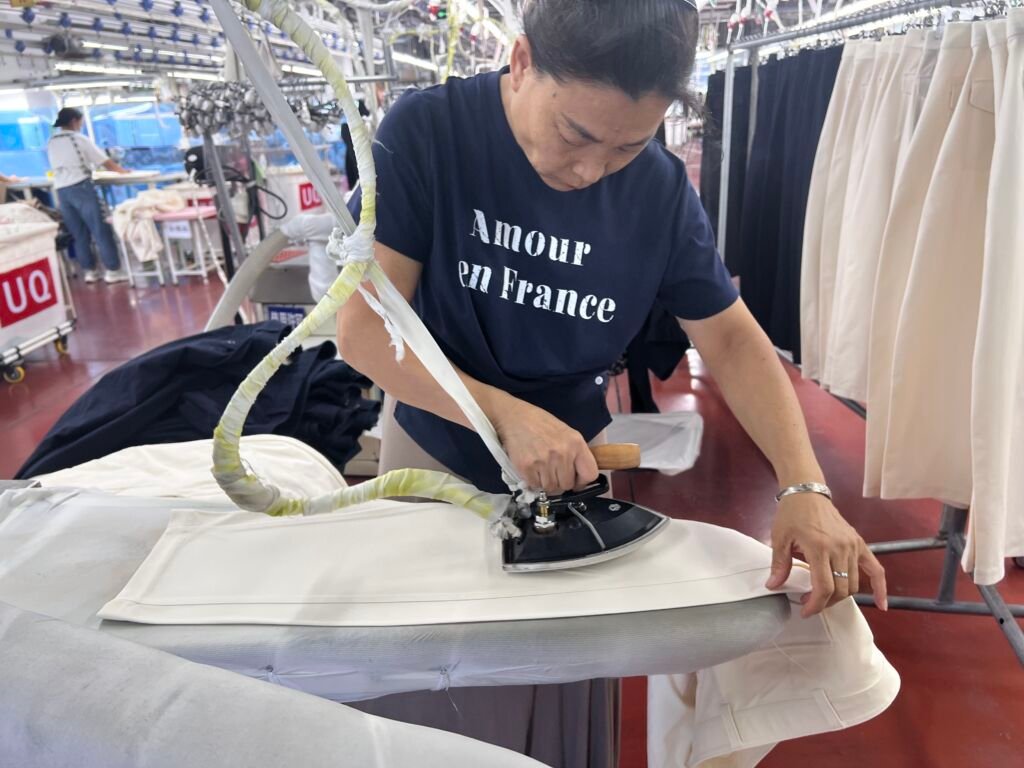
Clear standards make inspections more objective and reduce arguments after production.
Use an Approved Sample as the Reference
The final approved sample should represent what the bulk order must become.
It should confirm:
- Fabric
- Color
- Fit
- Measurements
- Construction
- Printing or embroidery
- Labels
- Trims
- Washing effect
- Packaging
I recommend sealing or clearly identifying the approved sample with:
- Style number
- Sample version
- Approval date
- Fabric code
- Color
- Size
- Buyer approval
- Manufacturer approval
Create a Production Reference Pack
The factory should receive one controlled file containing:
- Final tech pack
- Measurement chart
- Approved sample photos
- Fabric approval
- Trim card
- Artwork and placement details
- Packaging instructions
- Quality requirements
Do not allow different departments to follow different document versions.
The approved sample shows the expected result. The technical documents explain how to repeat it.
Brands needing product development and production preparation can review OEM and ODM Manufacturing Services.
Control Fabric Before Cutting
Fabric problems affect every later production stage.
Before cutting, check:
- Fiber composition
- Fabric weight
- Usable width
- Color
- Shade variation
- Surface defects
- Stretch and recovery
- Shrinkage
- Fabric direction
- Hand feel
Bulk Fabric Approval Checklist
| Check | Main Risk Prevented |
|---|---|
| GSM verification | Incorrect weight or hand feel |
| Shade grouping | Different colors within one garment |
| Shrinkage test | Incorrect finished measurements |
| Defect inspection | Holes, stains, lines, or damaged surfaces |
| Width check | Incorrect fabric consumption |
| Stretch check | Fit and recovery problems |
| Color comparison | Bulk color differing from approval |
Fabric rolls with noticeable shade differences should be separated before cutting.
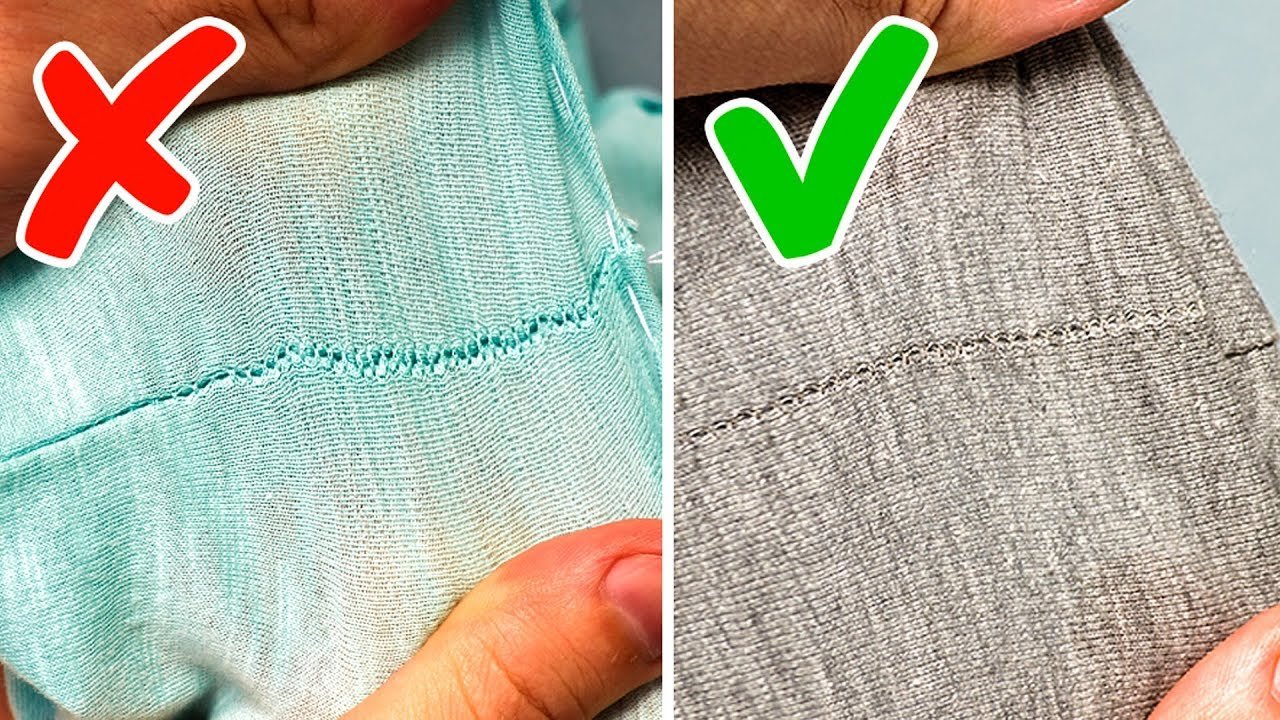
Pieces from different shade groups should not normally be combined in the same garment.
Brands requiring specific fabric performance can use Custom Fabric Development and review available options through the Custom Fabric Catalog.
Improve Measurement and Fit Control
Measurement problems are among the most common causes of returns and customer complaints.
Use one approved measurement chart containing:
- Measurement point name
- Measurement method
- Required measurement
- Allowed tolerance
- Size grading
- Diagram where necessary
Control Measurements at Three Points
Before Production
Measure the approved sample and confirm the pattern.
During Production
Measure the first pieces and selected garments from each production batch.
After Finishing
Measure garments after washing, steaming, pressing, or other processes that may change the size.
Do Not Use One Tolerance Everywhere
Different measurement points have different levels of importance.
For example:
- Neck width directly affects comfort.
- Sleeve length affects appearance and fit.
- Pocket position affects symmetry.
- A small body-width difference may be less serious in an oversized style.
The tolerance should reflect the product, fabric, measurement point, and intended fit.
First-Piece Approval
Before full production continues, inspect the first completed garments for:
- Measurements
- Fit
- Seam construction
- Pocket position
- Logo position
- Overall appearance
Correcting the first ten pieces is much easier than repairing an entire order.
Inspect Production at Four Stages
The strongest quality systems use several inspections instead of relying on one final check.
| Inspection Stage | When It Happens | Main Purpose |
|---|---|---|
| Material Inspection | Before cutting | Confirm fabric and trims |
| First-Piece Inspection | Start of production | Confirm setup and construction |
| In-Line Inspection | During sewing | Find repeated problems early |
| Final Inspection | Before shipping | Confirm finished order quality |
Material Inspection
Check fabric, color, shrinkage, labels, zippers, buttons, elastic, and packaging materials.
First-Piece Inspection
Review the first completed garments before production volume increases.
This is where you confirm that the production team understood the approved sample.
In-Line Inspection
Inspect garments while sewing is still in progress.
Look for:
- Repeated stitch problems
- Incorrect seam construction
- Measurement movement
- Uneven pockets
- Fabric damage
- Logo-position errors
- Poor reinforcement
Final Inspection
Final inspection should check:
- Finished measurements
- Workmanship
- Appearance
- Quantity
- Size assortment
- Labels
- Packaging
- Carton information
Bless Clothing uses material, in-process, and final checks as part of its Quality Control Services.
Classify Defects Correctly
Not every defect has the same level of risk.
A clear classification system helps inspectors make consistent decisions.
Critical Defects
A critical defect may create a safety, legal, or serious compliance risk.
Examples may include:
- Sharp metal parts
- Broken needles inside garments
- Incorrect safety warnings
- Restricted or dangerous components
- Serious labeling violations
- Unsafe drawcord construction
Critical defects normally require immediate investigation.
Major Defects
A major defect affects function, saleability, fit, or appearance.
Examples include:
- Broken seams
- Incorrect measurements
- Wrong fabric
- Large stains
- Missing labels
- Incorrect logo position
- Faulty zippers
- Visible color differences
A customer would probably reject or return the garment.
Minor Defects
A minor defect has a limited effect on product use or appearance.
Examples include:
- Small removable thread ends
- Minor pressing marks
- Slightly uneven internal stitching
- Small packaging presentation issues
Defect Decision Table
| Defect Question | Likely Classification |
|---|---|
| Could it harm the customer? | Critical |
| Does it affect function or legal compliance? | Critical or major |
| Would most customers reject the garment? | Major |
| Can it be corrected easily without affecting use? | Minor |
| Is it invisible and functionally harmless? | Possibly minor |
Create a product-specific defect list before inspection. A defect considered minor on loungewear may be major on premium tailored clothing.
Use AQL Sampling Correctly
AQL stands for Acceptance Quality Limit.
It is used with a sampling plan to decide how many units to inspect and when a production lot should be accepted or rejected.
The current ISO 2859-1:2026 Sampling Standard provides sampling schemes for lot-by-lot inspection by attributes.
What AQL Does
AQL helps determine:
- Inspection sample size
- Acceptance number
- Rejection number
- Inspection severity
What AQL Does Not Mean
AQL does not mean:
- Every uninspected garment is defect-free.
- AQL 2.5 guarantees exactly 2.5% defects.
- Final inspection replaces in-line control.
- The buyer must accept unsafe products.
- Every product should use the same limits.
A commonly used apparel starting point may be:
| Defect Type | Illustrative AQL |
|---|---|
| Critical | 0 |
| Major | 2.5 |
| Minor | 4.0 |
These are example values, not universal legal requirements.
Premium garments, children's products, safety-sensitive products, or important retail programs may require stricter limits.
AQL should verify a controlled production process, not replace one.
Test Washing and Product Performance
Visual inspection cannot reveal every quality problem.
Testing may be needed for:
- Shrinkage
- Pilling
- Colorfastness
- Seam strength
- Stretch recovery
- Spirality
- Abrasion
- Print durability
- Embroidery stability
- Zipper function
Wash Testing
Measure the sample before washing, follow the intended care method, and measure it again after drying.
The ISO 5077 Dimensional Change Standard covers determining dimensional changes after washing and drying.
Use this formula:
Dimensional Change % = (Before Washing − After Washing) ÷ Before Washing × 100
Pilling Testing
Pilling can make a garment look old after limited wear.
The ISO 12945-2 Pilling Standard covers the modified Martindale method for assessing pilling, fuzzing, and matting.
Test According to Product Risk
| Product | Important Checks |
|---|---|
| T-shirt | Shrinkage, twisting, neckline recovery |
| Hoodie | Pilling, rib recovery, print durability |
| Casual pants | Seam strength, color rubbing, waistband recovery |
| Jacket | Zipper, lining, seam strength, water resistance if claimed |
| Pajamas | Shrinkage, comfort, colorfastness |
| Printed garment | Cracking, peeling, fading, hand feel |
Test the features that affect how customers will actually use the product.
Control Printing, Embroidery, and Trims
A correct garment can still fail because of decoration or accessories.
Printing Checks
Confirm:
- Artwork size
- Position
- Color
- Ink coverage
- Texture
- Edge quality
- Wash durability
- Fabric compatibility
A print strike-off should be approved before full production when color, texture, or technique is important.
Learn more through Custom Printing Services.
Embroidery Checks
Check:
- Thread colors
- Stitch density
- Fabric puckering
- Missing details
- Backing material
- Comfort against the skin
- Placement consistency
Heavy embroidery may distort lightweight fabric. Test the complete fabric-and-embroidery combination before bulk production.
Trim Checks
Test:
- Zippers
- Buttons
- Snaps
- Elastic
- Rib
- Drawcords
- Eyelets
- Buckles
- Labels
Brands can compare options through Customized Accessories and Trims.
Create Clear Supplier Accountability
Quality responsibilities should be agreed before production begins.
Confirm who is responsible for:
| Issue | Responsibility to Define |
|---|---|
| Incorrect fabric | Replacement, credit, or rework |
| Measurement failure | Repair or remake plan |
| Print defects | Sorting and replacement |
| Late inspection | Revised production schedule |
| Failed testing | Material or process correction |
| Packing mistakes | Repacking responsibility |
| Defective shipment | Claim and resolution process |
Require a Corrective Action Plan
When a serious or repeated defect appears, ask the supplier to explain:
- What happened?
- Why did it happen?
- How many garments are affected?
- What immediate correction will be made?
- How will the factory prevent repetition?
- Who is responsible?
- When will the action be completed?
Do not accept “workers will be more careful” as a complete solution.
A stronger corrective action might include:
- New machine settings
- Revised sewing instructions
- Operator training
- Additional first-piece checks
- Different reinforcement
- Updated inspection frequency
Use Data to Prevent Repeat Problems
Quality control improves when decisions are based on records rather than memory.
Track:
- Defects by style
- Defects by operation
- Defects by production line
- Measurement failures
- Repair quantities
- Inspection results
- Customer returns
- Repeated supplier problems
Simple Quality Dashboard
| Metric | What It Shows |
|---|---|
| First-Pass Rate | Percentage passing without repair |
| Rework Rate | Percentage requiring correction |
| Defect Rate | Defects found per inspected quantity |
| Measurement Failure Rate | Sizing-control performance |
| Return Reason | Customer-facing product weakness |
| On-Time Correction Rate | Supplier response effectiveness |
Use a Pareto Review
List defects from most frequent to least frequent.
For example:
| Defect | Quantity |
|---|---|
| Uneven pocket position | 42 |
| Loose threads | 31 |
| Measurement failure | 18 |
| Print misalignment | 9 |
| Stains | 5 |
Fixing the largest repeated defect first usually creates a greater improvement than treating every problem equally.
The ISO Quality Management Overview explains the value of defined processes and continuous improvement.
Choose the Right QC Plan
Not every order needs exactly the same inspection plan.
| Order Situation | Recommended QC Focus |
|---|---|
| First order with a supplier | Material, first-piece, in-line, and final inspection |
| Repeat basic product | Confirm materials, measurements, and final consistency |
| Complex jacket | More frequent construction and trim checks |
| Custom-dyed fabric | Color, shade, shrinkage, and colorfastness |
| Large embroidery | Placement, puckering, density, and wash testing |
| Children's clothing | Safety and legal compliance checks |
| Urgent order | Do not remove essential inspections |
| Large retail program | Buyer-specific testing and AQL requirements |
When to Use Independent Inspection
Consider third-party inspection when:
- The order value is high.
- The supplier is new.
- Products are technically complex.
- Previous orders had serious problems.
- A retailer requires independent verification.
- You cannot inspect the goods personally.
An independent inspector should follow your specifications, not replace them.
30-Day Quality Improvement Plan
Use this simple plan to improve an existing production system.
Week 1: Define Standards
- Review customer complaints.
- Identify the five most common defects.
- Update measurement tolerances.
- Create defect examples.
- Confirm the approved-sample process.
Week 2: Improve Pre-Production Control
- Check fabric-testing requirements.
- Standardize trim approvals.
- Create one final production file.
- Introduce first-piece approval.
- Train the production and QC teams.
Week 3: Strengthen In-Line Inspection
- Inspect high-risk operations more frequently.
- Record repeated defects by production line.
- Correct machine and construction problems immediately.
- Review defect data daily.
Week 4: Improve Final Control
- Confirm the AQL plan.
- Standardize final inspection reports.
- Review packing accuracy.
- Issue corrective actions for repeated failures.
- Compare results with the previous month.
Improvement Scorecard
| Area | Current Score | Target Score |
|---|---|---|
| Specification Clarity | /10 | /10 |
| Material Control | /10 | /10 |
| Measurement Control | /10 | /10 |
| In-Line Inspection | /10 | /10 |
| Final Inspection | /10 | /10 |
| Corrective Action | /10 | /10 |
Repeat the review every month until the main defect rates fall and production becomes more stable.
Common Quality Control Mistakes
Inspecting Only at the End
Finished garments are more expensive and difficult to repair.
Add material, first-piece, and in-line inspections.
Using Vague Quality Standards
“High quality” is not measurable.
Define fabric, measurements, construction, appearance, and defect limits.
Approving Samples With Major Comments
Do not approve important fit, fabric, construction, or wash issues with a promise to correct them during bulk production.
Focusing Only on Loose Threads
Loose threads are visible but often easy to fix.
Pattern balance, shrinkage, seam strength, color, and measurements may create greater customer risk.
Ignoring Fabric Variation
Bulk fabric may differ from the small sample fabric in shade, weight, shrinkage, or surface quality.
Treating AQL as the Entire QC System
AQL is a final sampling tool. It cannot correct weak material control or poor sewing processes.
Not Recording Defects
Without records, the same problems return in future orders.
Rushing Shipment After a Failed Inspection
A failed inspection should lead to sorting, repair, investigation, and reinspection—not immediate shipment.
Ignoring Label Requirements
Brands selling clothing in the United States should review the FTC Clothing and Textile Guidance and the FTC Care Labeling Guide.
Questions to Ask Your Manufacturer
Before placing an order, ask:
- When are fabrics and trims inspected?
- How is the approved sample controlled?
- Who confirms the first production pieces?
- How often are measurements checked?
- Which defects are classified as critical, major, and minor?
- Which AQL plan is used for final inspection?
- Are inspection reports available?
- How are defective garments separated?
- What happens when an inspection fails?
- How are repeated problems investigated?
- Which performance tests can be arranged?
- How are print and embroidery tests approved?
- Can third-party inspection be accepted?
- How is quality controlled for repeat orders?
- Who pays for rework or replacement when specifications are not met?
The answers should be included in the production agreement or quality manual rather than discussed only through informal messages.
FAQ
What is clothing quality control?
Clothing quality control is the process of checking materials, measurements, construction, appearance, performance, labels, and packaging against approved requirements.
What is the best way to improve garment quality?
The best method is to create measurable standards and inspect at several stages instead of waiting until production is finished.
What is an in-line inspection?
An in-line inspection checks garments while production is still running. It helps factories find repeated problems before they affect the full order.
What is AQL in clothing inspection?
AQL is a sampling parameter used to determine inspection sample sizes and acceptance or rejection numbers for a production lot.
Does passing AQL mean every garment is perfect?
No. It means the inspected lot met the agreed sampling criteria. It does not guarantee that every uninspected garment is defect-free.
How often should garment measurements be checked?
Measurements should be checked on the approved sample, first production pieces, selected units during production, and finished garments before shipping.
Should every garment be inspected?
High-risk features and critical safety points may require 100% checking. Other quality areas may use controlled sampling, depending on the product and order requirements.
What should happen when final inspection fails?
The order should be held. The factory should sort or repair affected garments, identify the cause, complete corrective action, and arrange reinspection.
Is a factory certificate enough to guarantee quality?
No. Certifications may show that a management system was assessed, but the actual order still requires samples, specifications, testing, and inspections.
How can a small brand control quality?
Start with a clear tech pack, approved physical sample, fabric checks, first-piece inspection, production photos, measurement reports, and final inspection.
What is the most important QC document?
There is no single document. The approved sample, final tech pack, measurement chart, defect standard, testing requirements, and inspection report must work together.
Can Bless Clothing provide production quality control?
Bless Clothing supports apparel brands with material inspection, in-process control, final inspection, product development, sampling, and bulk manufacturing.
Conclusion
Improving clothing quality control requires more than hiring additional inspectors.
A stronger system includes:
- Measurable product standards
- Approved physical samples
- Fabric and trim inspection
- Accurate measurement control
- First-piece approval
- In-line inspection
- Clear defect classifications
- Suitable AQL sampling
- Product-performance testing
- Corrective action and defect tracking
From my experience, the most effective quality system follows one principle:
Prevent problems before production, detect them during production, and verify the finished order before shipment.
Brands that follow this process reduce rework, improve consistency, protect delivery dates, and give customers a more reliable product.
Bless Clothing helps casualwear brands manage product development, fabric sourcing, sampling, bulk manufacturing, printing, quality inspection, packaging, and international delivery.