
I’ve spent countless hours on the factory floor at Bless Custom Apparel, and if there is one thing I’ve learned, it’s this: A garment is only as strong as its weakest stitch.
You can source the world’s most expensive organic cotton, but if the construction is poor, that hoodie will fall apart after three washes. Most brand owners focus on the "look," but as a manufacturer, I focus on the "bones." High-quality construction is what transforms a piece of fabric into a long-lasting product that builds customer loyalty.
In this guide, I’ll take you behind the scenes to show you why precision stitching is the ultimate "silent salesman" for your brand.
Table of Contents
- Quick Answer: The Engineering of Apparel
- Stitch Density: The "SPI" Secret
- Seam Types: Choosing the Right "Skeleton"
- Reinforcement: Where Garments Usually Fail
- Comparison: Premium vs. Budget Construction
- Decision Matrix: Which Stitch for Which Style?
- FAQs: Real Talk on Construction Quality
- Build Durable Collections with Bless Clothing
Quick Answer
Stitching and construction matter because they determine a garment's Structural Integrity, Fit Consistency, and Longevity. Poor stitching leads to "seam grin" (visible threads when stretched) and unraveling. Quality construction involves using the correct Stitches Per Inch (SPI), specialized seams like Flatlock for comfort, and Bar-tacking at stress points. At Bless Clothing, we treat apparel as an engineered product, not just a fashion item.
Stitch Density: The "SPI" Secret
In the manufacturing world, we measure quality in SPI (Stitches Per Inch).
- The Budget Standard: Many fast-fashion factories use 6-8 SPI. It’s faster to sew and uses less thread, but the seams are weak and look "gappy."
- The Premium Standard: At Bless Clothing, we typically use 10-12 SPI.
- Why it matters: Higher stitch density creates a smoother, stronger seam that can withstand the tension of daily wear and machine washing without popping.
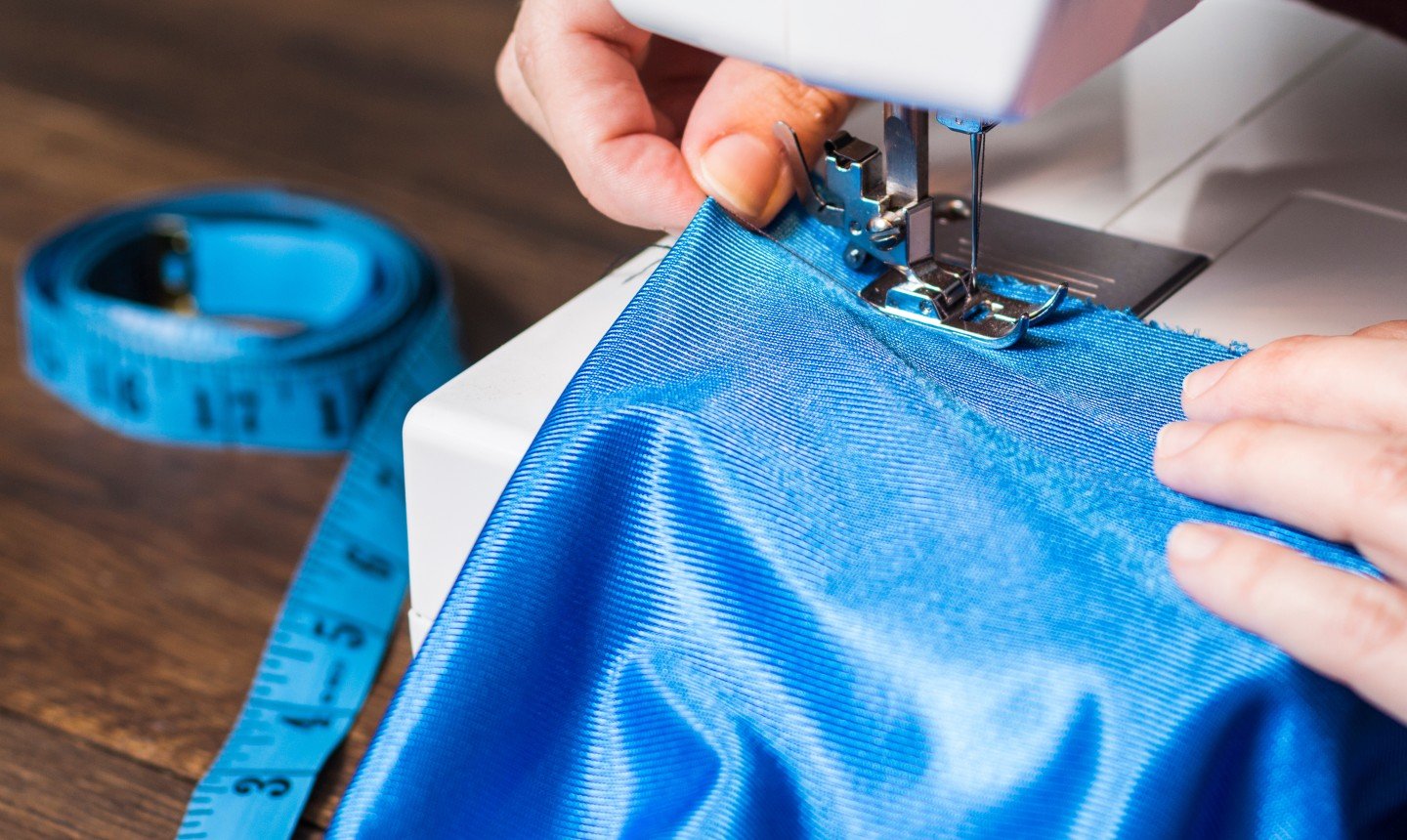
Seam Types: Choosing the Right "Skeleton"
The way two pieces of fabric are joined dictates the comfort and durability of the final product.
1. The Overlock (Serger) Seam
This is the industry standard for casual wear. It trims the fabric edge and encases it in thread to prevent fraying. It’s flexible and great for knits.
2. The Flatlock Seam
Commonly used in our activewear and premium loungewear, flatlock stitching joins two pieces of fabric edge-to-edge with no internal "flap."
- The Benefit: Zero bulk and zero chafing against the skin.
3. The Twin-Needle Coverstitch
Look at the hem of your favorite T-shirt. That double line of stitching is a coverstitch. It provides a professional, clean finish that allows the fabric to stretch without snapping the thread.
Reinforcement: Where Garments Usually Fail
I always tell my clients: "Check the stress points." These are the areas where the human body puts the most pressure on the fabric.
- Bar-tacks: These are heavy, dense zigzag stitches found at the corners of pockets, belt loops, and the base of zippers. Without them, your pockets will rip.
- Twill Taping: We often add a twill tape across the back neck and shoulder seams. This prevents the "sagging" look that happens when a heavy hoodie hangs on a hanger for too long.
- Stay Stitching: A hidden stitch used around curves (like necklines) to prevent the fabric from stretching out of shape during the assembly process.
Comparison: Premium vs. Budget Construction
| Feature | Budget Construction | Bless Clothing Premium |
|---|---|---|
| Stitches Per Inch (SPI) | 6–8 (Loose/Weak) | 10–12 (Tight/Durable) |
| Thread Quality | Basic Spun Polyester | High-Tenacity Core-Spun Thread |
| Edge Finishing | Raw or messy overlock | Clean, trimmed, and encased |
| Stress Points | Single-stitched | Bar-tacked and reinforced |
| Symmetry | Often skewed or twisted | Precision-aligned patterns |
Decision Matrix: Which Stitch for Which Style?
Choosing the right construction method depends on your target audience and price point:
- For Heavyweight Hoodies: Use Twin-Needle Topstitching on the armholes and cuffs. It adds a "rugged" aesthetic and doubles the seam strength.
- For Luxury Pajamas: Opt for French Seams. This encloses the raw edges completely, providing a high-end, "soft-on-the-skin" interior.
- For Performance Leggings: Flatlock Stitching is non-negotiable. Your customers won't tolerate bulky seams during a workout.
FAQs: Real Talk on Construction Quality
Q: Why do my seams look "wavy" or puckered?
A: This is usually a "Tension Issue." If the sewing machine isn't calibrated to the specific weight of your fabric, the thread pulls too tight, causing puckering. We perform "Tension Tests" at Bless Custom Apparel before every bulk run.
Q: Can I use different thread colors?
A: Yes, this is called Contrast Stitching. It’s a great way to make a basic garment look "designer," but it requires perfectly straight sewing because every mistake will be visible!
Q: What is "Back-tacking"?
A: It’s when a tailor sews backward at the beginning and end of a seam to "lock" the thread. Without it, the seam will simply unravel the first time you pull on it.
Build Durable Collections with Bless Clothing
In the end, construction is the difference between a "disposable" garment and a favorite staple. When you work with Bless Clothing, you aren't just getting a factory; you're getting a team of engineers who care about every single millimeter of thread.
Want to see the quality for yourself?
Request a sample from Bless Clothing and feel the difference that professional construction makes. Let's build something that lasts.